


 MyChart

Spring doesn’t just mean melting snow and the return of the geese—it means “ladder season.” From cleaning out the gutters and washing the siding to inspecting winter roof damage, grabbing the ladder out of the garage feels as routine as grabbing a rake.
But here’s the thing: every year, approximately 200,000 Americans end up in emergency rooms because of ladder falls — and most of those accidents happen close to the ground, on ordinary step ladders, doing ordinary home tasks.
Before you climb this spring, run through this quick list. Here are 10 simple ways to reduce your risk and stay safe while working at home.
1. Inspect it before you climb it.
Check every rung, side rail, and locking mechanism before you set foot on it. Bent rungs, damaged rails, loose hardware, or worn rubber feet are signs it’s time to replace the ladder—not just use extra caution. A ladder looks fine until the moment it isn’t.
2. Choose the right ladder for the job.
Ladders have load ratings (the weight they’re designed to hold, including you and everything you’re carrying). Household-grade ladders typically support up to 200 lbs; industrial-grade up to 300 lbs. Using a ladder that’s too light for the load — or too short, so you’re stretching — is one of the most common ways accidents happen.
Most ladders include a duty rating label that shows the maximum weight they can safely support.

3. Set up on level, solid ground.
It may be common sense, but it’s critically important. Soft soil, wet grass or an uneven driveway can let the ladder’s legs shift or slip mid-climb. Make sure all four feet are in solid contact with the ground before you step onto the ladder. Never prop a ladder on top of boxes, buckets, or other surfaces to get extra height.
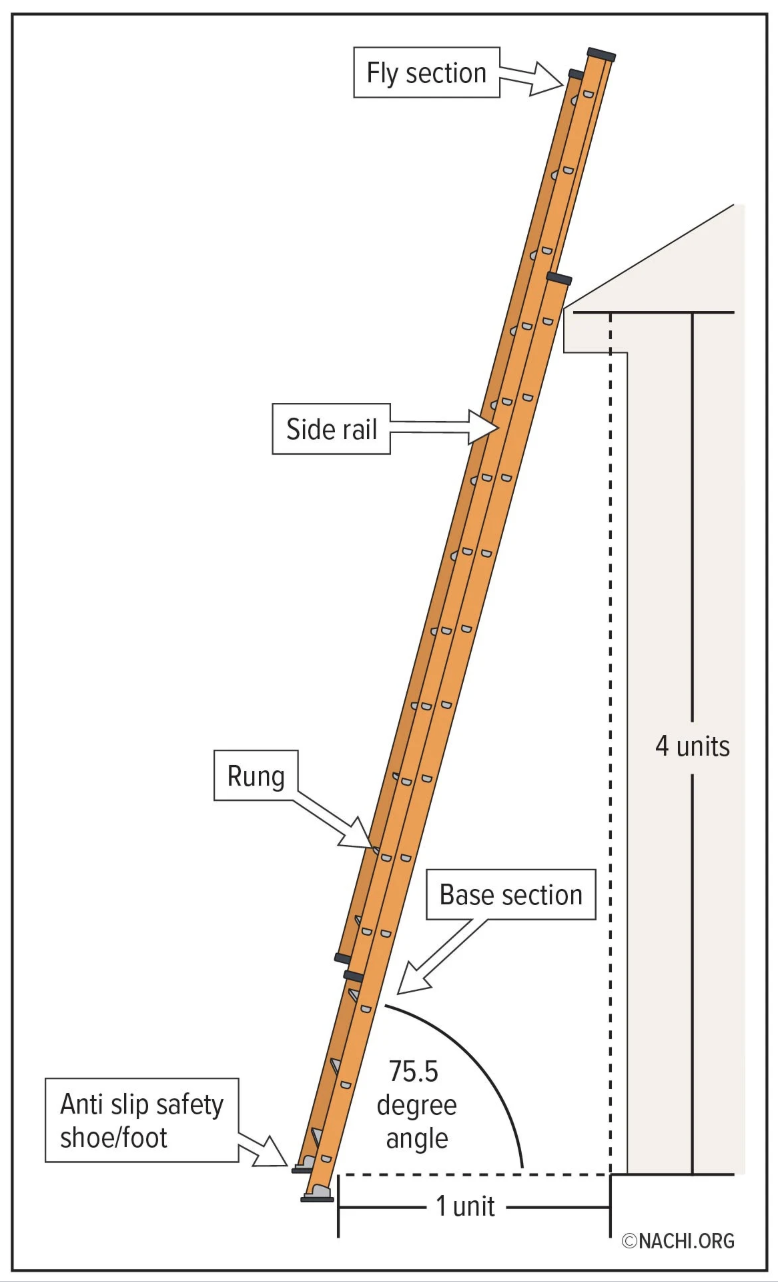
4. Use the 1:4 rule for extension ladders.
For every four feet of ladder height, the base should be one foot away from the wall. At a 75-degree angle, the ladder is stable. If the angle is too shallow, the base can slide out. The CDC notes that in about 40% of ladder-fall cases, the cause was an incorrect setup angle.
Most ladder injuries happen during routine tasks at home—not construction sites.
5. Always maintain three points of contact.
Two hands and one foot, or two feet and one hand — at least three of your four limbs should be in contact with the ladder at all times. This is one of the most effective ways to prevent a fall.
6. Don’t carry things while you climb.
Carrying a paint can, drill, or bundle of shingles while climbing shifts your weight and removes a hand from the ladder. Use a tool belt, a bucket with a hook, or have someone hand things up to you once you’re in position.
7. Never stand on the top two rungs.
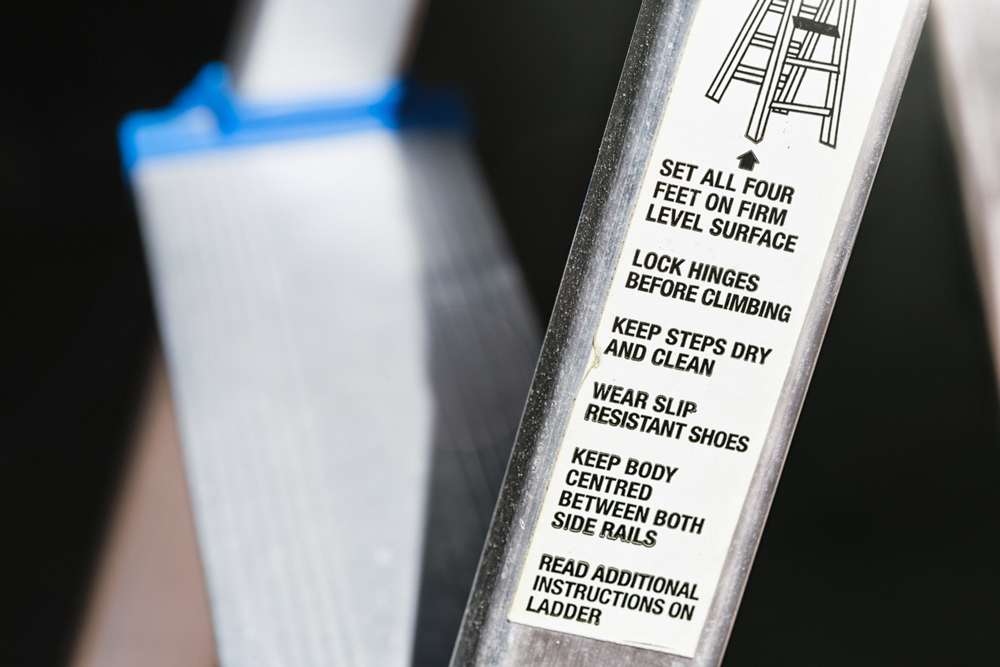
The top rung of a stepladder and the top two rungs of an extension ladder are not safe standing positions — the physics change dramatically and stability drops. The ladder will say so right on the label. Believe it.
8. Keep your hips between the rails.
If you find yourself leaning sideways to reach something, stop. Climb down and move the ladder. Overreaching is responsible for a large share of ladder falls, and it happens gradually — you shift just a little further, then a little further, and suddenly you’re off-balance.
9. Check for overhead hazards.
Look up before placing a ladder against a building. Contact with power lines can be deadly. While many incidents happen at work, more than 250 consumer-related electrocution deaths were reported in a single year. If you’re working near overhead lines, use a fiberglass ladder instead of an aluminum one.
10. Have someone spot you — or secure the base.
A second person holding the base of the ladder or positioned nearby isn’t just a good idea — for tall or heavy-duty jobs, it can be the difference between a scare and a serious injury. If you’re working alone, tie off the top of the ladder to a secure anchor point.
We’re here if you need us
Falls can happen even when you do everything right. If a fall does happen, don’t ignore symptoms like head, neck, back, or joint pain. It’s always better to get checked—especially if something doesn’t feel right.
Welia Health’s emergency department and urgent care teams are here to help, close to home.
Welia Health–Mora
Emergency Department
301 Highway 65 S
Mora MN 55051-1899
24 hours/7 days a week
Dial 911 for medical emergencies
Welia Health–Pine City
Urgent Care
1425 Main St N
Pine City MN 55063-6026
7:00 AM–7:00 PM Monday–Friday
9:00 AM–7:00 PM Saturday and Sunday