


 MyChart

A lot of adults come to ADHD late. Not because the symptoms weren’t there — but because nobody connected the dots.
Attention-deficit/hyperactivity disorder is a neurodevelopmental condition — meaning it affects how the brain develops and processes information. It’s not a character flaw, a productivity problem, or the result of bad habits. It’s a difference in brain wiring that affects focus, impulse control, and getting things done.
ADHD is most often diagnosed in childhood, but it doesn’t disappear at 18. According to the National Institute of Mental Health, an estimated 4.4% of American adults have ADHD, and the majority are undiagnosed or untreated. Many adults spend years developing coping strategies without ever understanding why certain things feel so much harder for them than they seem to for everyone else.
Common misconceptions worth clearing up
- ADHD is a childhood condition.
Not true. Symptoms often persist into adulthood, though they may look different. The hyperactive child who couldn’t sit still in class may become the adult who jumps from task to task without finishing anything.
- ADHD just means you can’t focus.
Actually, it’s more complicated. Many adults with ADHD experience hyperfocus — the ability to become so absorbed in something that hours go by while everything else is ignored. The challenge isn’t always too little attention; it’s attention that’s hard to direct and regulate.
- You’d know if you had ADHD.
Many adults — especially women, who are historically underdiagnosed — may reach 30, 40, or older before ever receiving a diagnosis. Symptoms are often attributed to anxiety, depression, or just personality. The result is years of wondering what’s wrong when the real answer was something treatable all along.
What adult ADHD actually looks like
Adult ADHD rarely looks like a kid bouncing off walls. It tends to show up in quieter, more chronic ways that are easy to explain away. Here’s what to watch for.
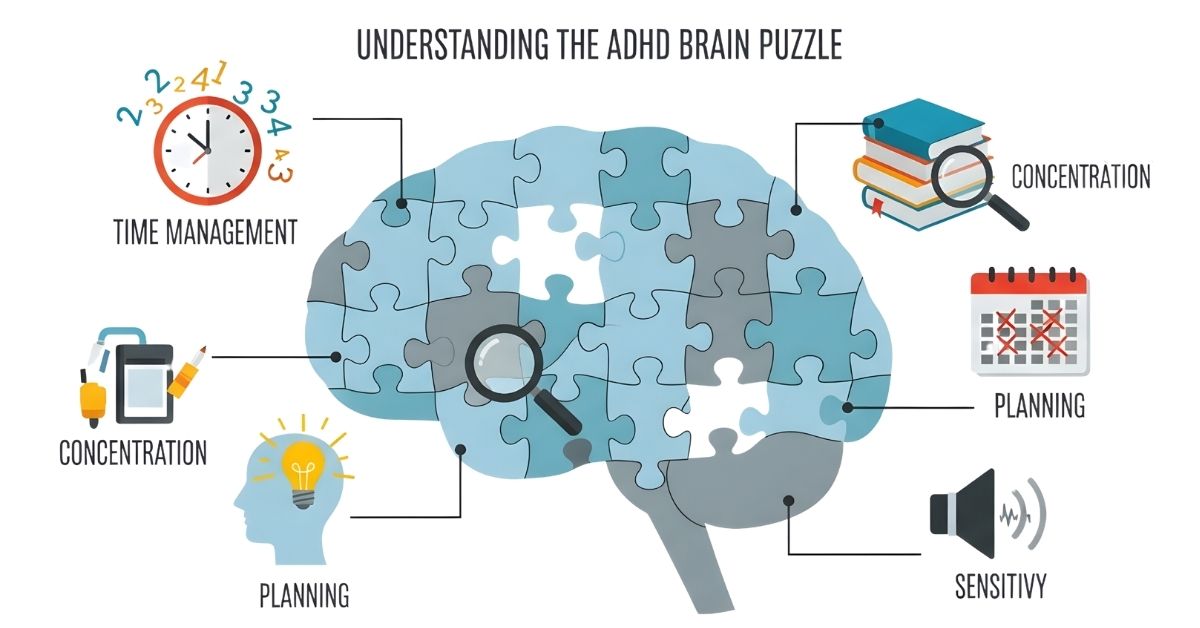
- Chronic disorganization and time blindness
It’s not just being messy. Adults with ADHD often struggle to prioritize tasks, estimate how long things will take, and follow through on plans — even ones they genuinely intend to keep. Missing appointments, running late, and leaving things unfinished aren’t signs of laziness; they’re often signs of a brain that processes time differently.
- Difficulty sustaining focus—or stopping it
Trouble staying on task in meetings or during routine work is common. So is the flip side: locking in on something engaging so intensely that you lose track of time and ignore everything else. Both are part of the same underlying pattern.
- Forgetfulness that goes beyond normal
Regularly misplacing items, forgetting important dates, or losing track of conversations — not occasionally, but as a consistent pattern — is a hallmark of adult ADHD. This kind of forgetfulness should not be mistaken for carelessness or lack of intelligence — because it’s neither.
- Impulsivity
Common examples include interrupting others, making quick decisions without thinking them through, speaking before thinking, or making impulse purchases. Impulsivity in adults is often more subtle than in children, but its impact on one’s personal and professional life can be significant.
- Emotional dysregulation
Adults with ADHD often experience emotions more intensely and have a harder time shaking them off. Frustration, irritability, or feeling easily overwhelmed — especially in response to perceived criticism — are commonly overlooked symptoms.
- Restlessness and difficulty relaxing
The hyperactivity of childhood ADHD often morphs into internal restlessness in adults, appearing as a constant sense of needing to be doing something, an inability to wind down, or a mind that just won’t quiet.
- Anxiety, low motivation, and fatigue
These go hand-in-hand with ADHD. The chronic effort of managing symptoms — staying organized, keeping up, compensating for what doesn’t come naturally — is exhausting. Anxiety is so common that roughly 50% of adults with ADHD have an anxiety disorder.
Why many women are diagnosed late — or not at all
Research shows that females are less likely to be diagnosed with ADHD, are diagnosed later in life, and are less likely to be prescribed medication, and the reason comes down to how the condition has historically been defined.
ADHD presents differently across individuals, and it tends to look different in women than the classic picture suggests. Women are more likely to internalize symptoms — anxiety, self-criticism, exhaustion from years of compensating — while the more visible hyperactive presentation has long shaped who gets diagnosed and when. If you’ve wondered whether ADHD “really” applies to you, know that the classic picture has been incomplete.
When to seek an evaluation
If the signs above feel familiar — not occasionally, but as a persistent pattern that’s affecting your work, relationships, or sense of self — it’s worth talking to a Welia Health mental health provider. A formal evaluation looks at your full history, rules out other explanations, and can open the door to treatment that actually helps. This may include a referral to a psychologist for formal testing. Once the diagnosis is confirmed, Welia Health can continue your care.
Treatment for adult ADHD typically includes a combination of:
- Behavioral therapy — practical strategies for organization, time management, and emotional regulation, often addressed through individual or group sessions.
- Coaching — skill-building support for daily executive function challenges, separate from therapy and focused on practical day-to-day strategies.
- Lifestyle adjustments — sleep, exercise, dietary changes and consistent structure all have meaningful effects on symptom severity and are often part of any treatment plan.
- Medication — stimulant and non-stimulant options are both effective for many adults. Your provider can help determine what fits your history and symptoms.
You’re not broken. You may just need answers.
ADHD in adults is real, common, and treatable. If something in this article resonated with you, that’s worth paying attention to. A conversation with your provider is the next step. Call Welia Health at 320.679.1313 or log into MyChart to schedule an appointment.
Additional resources
If you’re considering an ADHD evaluation or looking for support, here are a few additional resources to explore.