
Welia Health Connections
welia health logo
320.679.1212

Pine City Farmer’s Market

What is resistance training?

Resistance training is a form of exercise intended to increase muscular strength and endurance. It involves exercising muscles using some form of resistance – which could be weights, bands, or even your own body weight.

Also sometimes called strength training or weight training, resistance training is a relatively accessible option – whether you plan to work out at home or add to your current gym routine. The benefits of resistance training are important, especially as you get older. While increased strength and mobility are certainly helpful to all ages, you want to be sure you are fighting muscle loss as you age.

What are the benefits of resistance training?

  • Boosts metabolism and reduces body fat – If you have a goal to lose weight, resistance training could be very helpful. Studies have found that it can be more helpful in improving your metabolism than aerobic exercise. Just 9 months of consistent resistance training can significantly increase your resting metabolic rate. (This does not mean that cardio is ineffective! Try combining both forms of exercise for the best results.)
  • Increases bone density and improves balance – Your bones can benefit from resistance training, too. In addition to maintaining and increasing bone mass and density, your balance and stability will improve as well, which is especially important as you age.
  • Improves mental health – A study based on the quality of life in older adults found that resistance training improved mental, emotional and social function; not just physical function. Resistance training has been shown to help alleviate depression and anxiety symptoms and relieve stress – even when the workout is relatively mild.
  • Builds muscle mass, strength and endurance – Regardless of whether your goal is to build muscle mass or to minimize muscle loss (known as muscle atrophy), resistance training is an excellent choice. It also helps your muscles remain healthy and functional so you are able to stay active for longer periods of time.
  • Increases self esteem – Researchers have noted that engaging in resistance training can raise self-esteem – especially in women. Female participants in research studies reported feeling invigorated and empowered after resistance training workouts. They also indicated they felt greater self-worth and enjoyed a healthy confidence boost!

Let’s get started!

It’s important to note that you do not have to buy equipment to get started with resistance training, and it is not necessary to join a gym or hire a personal trainer. Many people like to start with just their own body weight providing resistance as they do exercises like push-ups, squats, planks, and more. Later, you can add weight like gallon jugs of water, soup cans in a canvas bag, or an unopened bag of flour inside a backpack. Once you’ve achieved a certain level of expertise, you might want to invest in equipment like adjustable dumbbells.

If you have a medical condition or a disability – or if you are just getting started with an exercise routine – you should talk to your healthcare provider. He or she can provide advice and insight into what is best for you given your medical history.

IMPORTANT: Make sure you are using the proper form in your exercises. Not only will this ensure you will get the most from your workout, it will also minimize your risk of injury. Diagrams in exercise magazines, library books, or on reputable sites online can demonstrate the proper posture and body positioning of many exercises if you are unsure of the correct form to use.

In addition to using the proper form, the following are important workout safety tips:
  • Be smart about how much weight you use – Using weights that are too heavy can lead to improper form and injury. Never use more weight or resistance than you can handle at your fitness level.
  • Stay hydrated – Drinking water will help you avoid dehydration and fatigue.
  • Stop if you experience pain – If you feel any pain or discomfort, stop working out and talk to your medical provider. You should also seek medical attention if you injure yourself. For example, if you hit your head, see a healthcare provider even if you think you are okay. Concussions are dangerous and should not go untreated.
  • Find a workout buddy – In addition to being there to help if you injure yourself or need a spotter, exercising with a friend increases motivation and accountability.

The Body-Weight Squat

This exercise engages your glutes, hamstrings, quadriceps, calves and core.

  • Begin with your feet slightly wider than your hips and toes slightly turned out.
  • Engage your glutes and act as if you are sitting in a chair.
  • Make sure your knees do not go past your toes.
  • Stop at the bottom of the move with your hips slightly higher than your knees.
  • Press through your heels as you come back to a standing position.
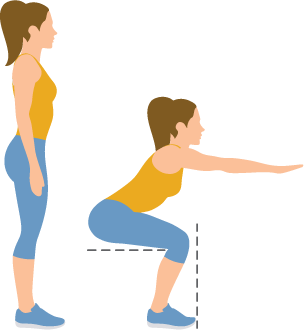
The Body-Weight Squat

Do 2 to 3 sets, with 10 to 12 repetitions per set.

The Modified Push-Up

This exercise engages your chest, triceps and core.

  • Start on your hands and knees and walk your hands forward.
  • Stop when your abs engage, and a diagonal line forms from the back of your knees to your shoulders.
  • Place your hands slightly wider than your shoulders.
  • Lower your chest slowly toward the floor. At the bottom of the rep, your elbows should form a line with your wrists.
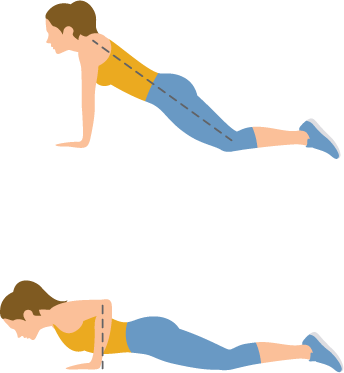
Do 2 to 3 sets, with 5 to 8 repetitions per set.

As you gain strength, you can increase the number of reps in each set and eventually work up to a traditional push-up without your knees on the floor.

The Sit-Up

This excellent core exercise engages your abs, hip flexors and lower back.

  • Start by lying on your back with your knees bent.
  • Put your fingertips on the back of your ears or cross your arms over your chest.
  • Keeping your feet flat on the floor, lift your torso up toward your knees, and slowly lower back down.
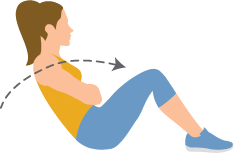
Do 2 to 3 sets, starting with 8 to 10 repetitions per set.

Exercise safely!

3 important things to remember:

  1. Stay hydrated during your workout
  2. Don’t use more weight than you can handle
  3. Stop if you experience any pain

Pine City Farmer’s Market

Tips to keep you feeling your best!

Summer is here! That means warmer weather, longer days, and more opportunities to get outside and enjoy all that nature has to offer. It’s the perfect time of year to eat better, be more active, and focus on your well-being. However, summertime also has its own set of challenges, so please use these tips to help you stay safe and healthy all summer long!

Stay hydrated

  • Drink water (our tap, unsweetened bottled or sparkling) instead of sugary or alcoholic drinks to reduce calories and stay safe.
  • Try adding your favorite fruit, fresh mint or cucumber slices to your water for a refreshing, low-calorie drink. Enhancing the flavor of water this way can encourage you to drink more of it – which helps you stay hydrated and keeps your appetite under control.

Eat healthy foods

  • Choose in-season fruits & vegetables – they are more flavorful and nutrient-rich because they stay on the branch longer; and they’re often less-expensive as well. Fresh produce is full of phytonutrients, antioxidants and vitamins to help prevent cancer and improve your overall health.
  • Fill your plate wisely. Your plate at mealtime should be two-thirds plant-based foods like vegetables and fruit, whole grains and beans; and one-third lean proteins. Watch out for starchy veggies like baked beans, corn and potatoes. While they do have some nutritional benefits, they should not exceed one-quarter of your plate.

Protect skin & eyes

  • Wear sunscreen to protect yourself from skin damage when spending time outdoors. Use an SPF of at least 30, and remember to reapply every 2 hours and after swimming or sweating.
  • Wide-brimmed hats provide better protection from the sun than baseball caps.
  • Sunglasses should have both UVA and UVB protection.
  • Use insect repellent to prevent mosquito bites and ticks. (Wearing long sleeves and long pants can help with this as well.) It’s best to apply your sunscreen before the insect repellent.
  • Seek shade between 10am and 4pm when the sun’s UV rays are the strongest.

Move your body

Physical activity has immediate benefits for your health – better sleep and reduced anxiety are just two. In addition, exercise has many long-term benefits: heart and brain health, bone strength, weight control, cancer prevention, improved coordination and balance, and more.

  • The amount of exercise you need depends on your age and health. For example, older adults may need to do more than younger adults to achieve the same fitness level. People with chronic health conditions (or who are at risk for them) may need modified exercise plans.
  • Adults should do at least 150 minutes of aerobic physical activity (such as brisk walking) per week.
  • Kids and teens should do 60 minutes or more of physical activity every day.
  • In addition to aerobic activity, adults should do muscle strengthening activities (such as sit-ups, push-ups, or weight training) at least 2 days a week.

Be smart with food safety

Summertime is the peak season for foodborne illnesses. The good news is that there are many ways to avoid getting sick from the foods you eat. Use these tips when preparing and enjoying food in warmer weather –

  • Never leave perishable food out in the sun or heat for more than 2 hours.
  • Pack food in an insulated cooler with ice packs.
  • Use separate cutting boards for raw meat and vegetables; wash cutlery between every use.
  • Wash your hands thoroughly and often, especially after handling raw meat.
  • Always cook meat to the correct temperature. Clean grill grates with soapy water before using.
  • For the healthiest grilling, ditch the processed meats like hot dogs & hamburgers, and replace with skinless chicken, turkey breasts or fish.

Manage your health

Many of us tend to be more relaxed during the summer months, but we should be careful not to fall behind on doctor appointments, vision checks, etc. It’s also a good time to check on elderly neighbors and loved ones. Summer can be difficult for those who are elderly or have chronic health conditions because the heat can aggravate their symptoms. In addition, remember to keep the following tips in mind –

  • Stay informed. Avoid spending time outside if extreme heat or poor air quality is predicted.
  • Watch out for heat exhaustion (signs include heavy sweating, dizziness and lightheadedness) and heatstroke (high body temperature, confusion and unconsciousness) – call 911 immediately if you or someone you’re with shows signs of heatstroke.
  • Try to get at least 7 hours of sleep per night. Busy summer schedules and longer days can compromise our sleep time – putting us at greater risk for higher blood sugar, poor concentration, frequent illness and impaired problem-solving.

Be careful with fireworks

Fireworks are a staple of summer celebrations, but they can be very dangerous. Thousands of people are injured by fireworks each year.

  • Never allow young children to play with or ignite fireworks.
  • Older kids should only use fireworks under close adult supervision.
  • Have a bucket of water or a fire extinguisher on hand in case of emergencies.
  • Light fireworks one at a time, and then move away quickly.
  • Never try to re-light or pick up fireworks that have not fully ignited.
  • Keep fireworks away from buildings & vehicles.
  • Never point or throw fireworks at another person.
  • Keep pets indoors during fireworks displays.

Summer safely!

3 important things to remember:

  1. Hydrate, eat wisely, and get moving
  2. Protect your skin and eyes from the sun
  3. Enjoy safe gatherings with loved ones

Pine City Farmer’s Market

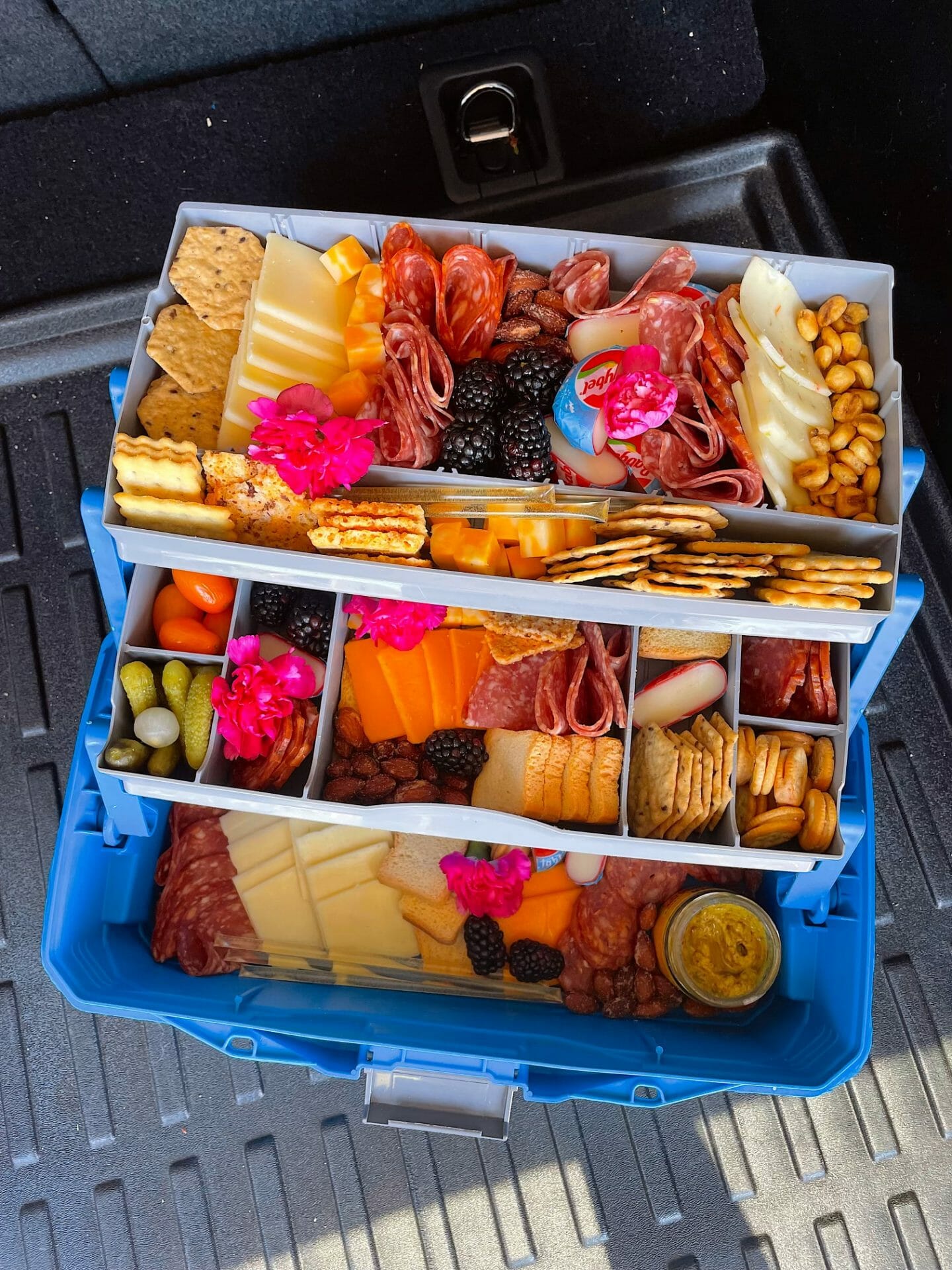
Enjoy this creative and kid-friendly spin on the traditional charcuterie board that is often served at parties and gatherings. Instead of using a traditional platter or board, arrange an assortment of meats, cheeses, fruits, crackers, and other snacks in the separated compartments of the tackle box trays.

The snackle box – “charcuterie board’s cousin” – is a portable, fun and very convenient way to enjoy charcuterie while on-the-go. Try one out for your next neighborhood gathering, family picnic or day at the lake!

Looking for ideas?

Tackle Box Charcuterie
Credit: Icecream And Neon Dreams

The types of foods you can include in your snackle box are virtually endless – common items include:

  • assorted meats: such as salami, prosciutto, pepperoni, beef jerky, etc.
  • cheeses (such as cheddar, brie, gouda)
  • fruits (such as grapes, berries, sliced apples)
  • veggies (such as carrots, cucumbers, celery, peppers, peapods)
  • crackers or cubed bread
  • spreads: hummus, mustard, honey, jelly or jam
  • pickles and olives
  • M&Ms or other candy
  • pretzels or corn chips

The possibilities are endless!

Source: Snacks On The Go! 18 Tackle Box Charcuterie Ideas, International Charcuterie Association

Happy snacking!

Pine City Farmer’s Market

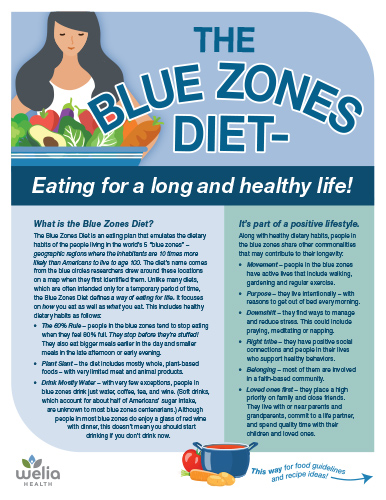
What is the Blue Zones Diet?

The Blue Zones Diet is an eating plan that emulates the dietary habits of the people living in the world’s 5 “blue zones” – geographic regions where the inhabitants are 10 times more likely than Americans to live to age 100. The diet’s name comes from the blue circles researchers drew around these locations on a map when they first identified them. Unlike many diets, which are often intended only for a temporary period of time, the Blue Zones Diet defines a way of eating for life. It focuses on how you eat as well as what you eat. This includes healthy dietary habits as follows:

  • The 80% rule – people in the blue zones tend to stop eating when they feel 80% full. They stop before they’re stuffed! They also eat bigger meals earlier in the day and smaller meals in the late afternoon or early evening.
  • Plant slant – the diet includes mostly whole, plant-based foods – with very limited meat and animal products.
  • Drink mostly water – with very few exceptions, people in blue zones drink just water, coffee, tea, and wine. (Soft drinks, which account for about half of Americans’ sugar intake, are unknown to most blue zones centenarians.) Although people in most blue zones do enjoy a glass of red wine with dinner, this doesn’t mean you should start drinking if you don’t drink now.

It’s part of a positive lifestyle.

Along with healthy dietary habits, people in the blue zones share other commonalities that may contribute to their longevity:

  • Movement – people in the blue zones have active lives that include walking, gardening and regular exercise.
  • Purpose – they live intentionally – with reasons to get out of bed every morning.
  • Downshift – they find ways to manage and reduce stress. This could include praying, meditating or napping.
  • Right tribe – they have positive social connections and people in their lives who support healthy behaviors.
  • Belonging – most of them are involved in a faith-based community.
  • Loved ones first – they place a high priority on family and close friends. They live with or near parents and grandparents, commit to a life partner, and spend quality time with their children and loved ones.

Blue Zones food guidelines

Monthly

  • Retreat from meat – Blue zones centenarians eat about 2 oz or less about 5x per month
  • Reduce dairy

Weekly

  • Slash sugar – Consume only 28 grams (7 teaspoons) of added sugar daily
  • Eliminate eggs – No more than 3 per week
  • Go easy on fish – Fewer than 3 oz, up to 3 times weekly

Daily

  • Snack on nuts – About 1-2 handsful a day
  • Drink mostly water – About 7 glasses/day; coffee, tea, and wine in moderation
  • Daily dose of beans – Half-cup to one cup/day
  • Go wholly whole – Single-ingredient, raw, cooked, ground, or fermented, and not highly processed
  • 95-100% plant-based

Check out these delicious recipes

Welia Health has picked our 3 favorite Blue Zones recipes to get you started!

Pine City Farmer’s Market

Banana Oatmeal Cookies

Yield: 12 servings

Ingredients

  • 2 cups old-fashioned oats
  • 1 teaspoon baking soda
  • 1 teaspoon cinnamon
  • 1 ½ teaspoon unsweetened cocoa powder
  • ¼ teaspoon nutmeg
  • ¼ teaspoon ground ginger
  • 4 medium-sized ripe bananas
  • ⅓ cup chopped walnuts

DIRECTIONS

  1. Preheat oven to 350˚. Line a baking sheet with parchment or spray with non-stick spray.
  2. Use a high-power blender to process oats to the consistency of flour. Pour into mixing bowl and add baking soda and spices.
  3. Blend bananas until completely smooth. Add to oatmeal mixture along with the nuts (or other dried fruit) and mix until combined.
  4. Drop 2 tablespoon balls of dough onto cookie sheet, spacing well. Dip the scoop or spoon into water to keep the dough from sticking. Use lightly moistened fingers to flatten each cookie. Bake for 15 minutes.
  5. Cool cookies on wire rack and store in an airtight container.

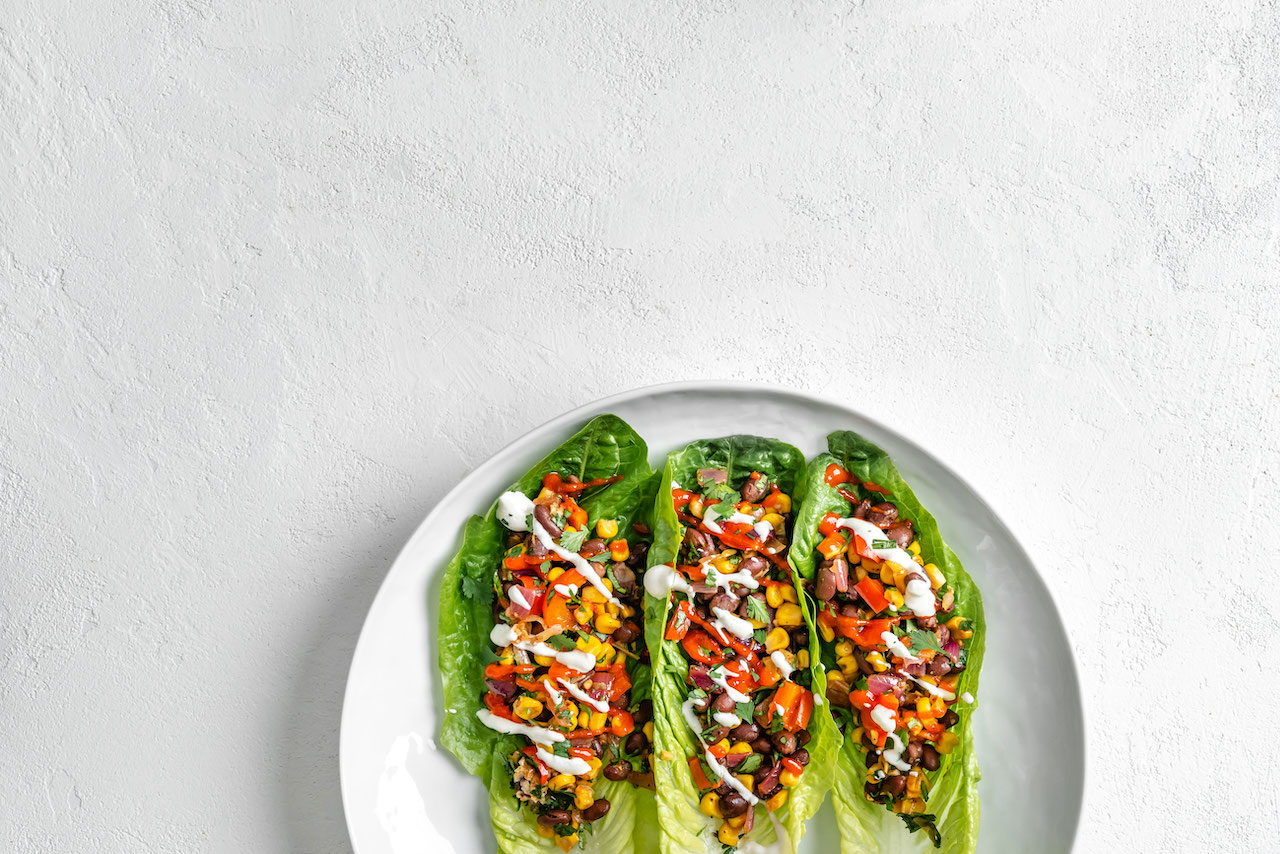
Southwestern Lettuce Wrap

Southwestern lettuce wraps

Total Cook Time: 30 minutes | Serves 2-4

INGREDIENTS

  • 1 ½ tablespoons vegetable oil
  • 1 small red or green bell pepper, diced
  • 1 small red onion, diced
  • 1 (15-ounce) can corn kernels, drained and rinsed
  • 3 garlic cloves, minced
  • 1 (15-ounce) can black beans, drained and rinsed
  • ¼ cup packed minced fresh cilantro
  • 1 teaspoon chili powder
  • Salt, to taste
  • Juice of ½–1 lemon
  • Large lettuce leaves (romaine, butter lettuce, iceberg, etc.)
  • Avocado slices
  • Diced tomatoes
  • Hot sauce

DIRECTIONS

  1. In a large skillet, heat the oil over medium-high heat. Add the bell pepper and onion and sauté until the veggies start to become tender, 1 to 2 minutes.
  2. Add the corn and garlic and sauté for 5 minutes.
  3. Stir in the beans, cilantro, chili powder, salt, and lemon juice (start with 1/2 of the lemon and add more at the end if you’d like more tang) and cook just until heated through.
  4. Allow to cool for 5 minutes, then serve in lettuce leaves.

BBQ Jackfruit Sandwiches

BBQ Jackfruit Sandwiche

Prep time: 5 minutes | Total time: 5 minutes
Yield: 4 sandwiches

INGREDIENTS

  • 1 batch BBQ Pulled Jackfruit
  • 1 cup finely shredded purple cabbage (or coleslaw, store-bought or from the recipe on page 162)
  • 1 large red onion, finely sliced
  • Dill pickles, sliced, to taste
  • 4 burger buns, toasted

PULLED JACKFRUIT INGREDIENTS

  • 2 (20-oz) cans young green jackfruit, drained
  • 1 tbsp canola or vegetable oil
  • ½ small red onion, diced
  • 2 medium cloves garlic, minced
  • 1 teaspoon smoked paprika
  • 1 cup vegan barbecue sauce

DIRECTIONS

  1. Assemble each sandwich with a large scoop of hot BBQ-pulled jackfruit topped with cabbage or coleslaw, red onion, and pickles on a toasted bun. Devour immediately.

Notes: Some brands of buns get soggy really easily. If that’s a deal-breaker for you, try using a sturdier roll or ciabatta instead.

PULLED JACKFRUIT DIRECTIONS

  1. Using your fingers, pull apart the jackfruit pieces into shreds and remove all the tough pieces. Place the shreds and the oil in a medium pan
  2. Place the pan over medium-high heat and add the onion and garlic—Sauté for 4 minutes or until the onion becomes translucent. Add the paprika and cook for 3 more minutes.
  3. Pour in the barbecue sauce and cook for 3 minutes. Serve hot.

Pine City Farmer’s Market

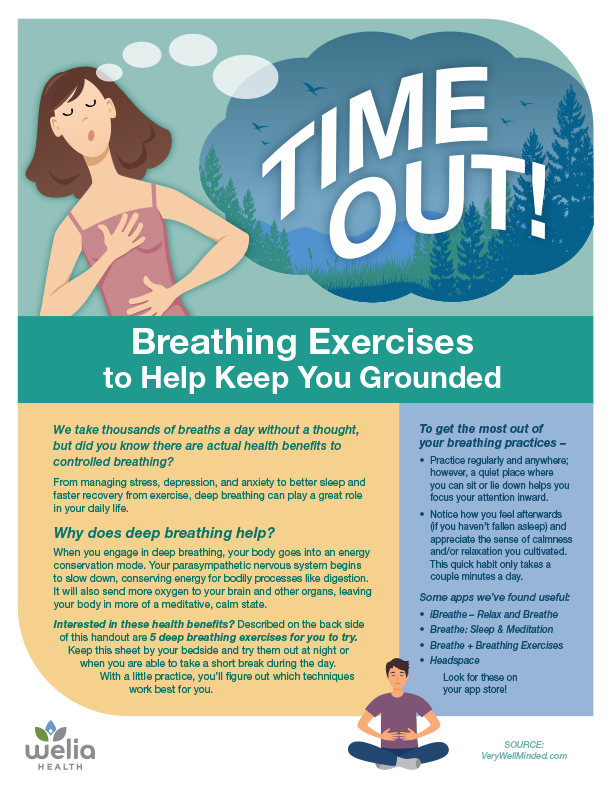
We take thousands of breaths a day without a thought, but did you know there are actual health benefits to controlled breathing? 

From managing stress, depression, and anxiety to better sleep and faster recovery from exercise, deep breathing can play a great role in your daily life.

Why does deep breathing help?

Illustration of an individual's head with white flowers

When you engage in deep breathing, your body goes into an energy conservation mode. Your parasympathetic nervous system begins to slow down, conserving energy for bodily processes like digestion. It will also send more oxygen to your brain and other organs, leaving your body in more of a meditative, calm state.

Interested in these health benefits? Described on the back side of this handout are 5 deep breathing exercises for you to try. Keep this sheet by your bedside and try them out at night or when you are able to take a short break during the day. With a little practice, you’ll figure out which techniques work best for you.

To get the most out of your breathing practices –

  • Practice regularly and anywhere; however, a quiet place where you can sit or lie down helps you focus your attention inward.
  • Notice how you feel afterwards (if you haven’t fallen asleep) and appreciate the sense of calmness and/or relaxation you cultivated. This quick habit only takes a couple minutes a day.

Some apps we’ve found useful:

Look for these on your app store!

Source: VeryWellMind.com

5 deep breathing exercises for you to try out today

Abdominal breathing

Lie down with your legs straight and slightly apart. Point your toes upward with your arms gently by your side, palms facing up.

  • Close your eyes. Inhale with your nose and exhale through your mouth.
  • Next, place one hand on your chest and one on your stomach. Take a few deep breaths and notice which hand raises most when you inhale. If the hand on your chest raises the most, focus on filling your abdomen with each inhale, like a deep belly breath.
  • It should get easier over time.
  • Complete this process for 5-10 minutes or during quick breaks throughout the day.

Counting while breathing

Need help falling asleep? Swap out counting sheep for counting breaths.

  • Lie down in bed, focusing on the exhale of your breathing. Feel the bed supporting your body under you while you exhale; try to relax. Count from one to ten, slowly backward, while pairing the count with your exhales.
  • You can also try other variations, like counting down from 100. See what works best for you.
  • Repeat this sequence until you fall asleep.

Body scan

The body scan breathing technique is another exercise designed to help you relax and fall asleep.

  • Lie down in bed, focusing on the exhale of your breathing. Feel the bed supporting your body under you while you exhale; try to relax.
  • Visualize each part of your body, starting at your head, moving down the rest of your body, and finding any tight or tense spots.
  • Exhale and focus on relaxing that area of the body. After you’ve looked for areas of tension in your body, focus on your exhale.
  • Try repeating a mantra or a word to yourself to help induce sleep, like the word “sleep” or another cue to help you drift off. Science has found that the body scan technique can be very effective in helping with sleep issues.

Breathing imagery

Illustration of a man sitting cross-legged with eyes closed and relaxing

By using visualizations or mental images, you can enhance this deep breathing exercise. Lie down in bed, focusing on the exhale of your breathing. Feel the bed supporting your body under you while you exhale; try to relax.

  • Feel the calm and re-enter these spaces of your body. Visualize a calming scene, maybe that’s a beach, or gentle waves, the sound of seagulls, the wind blowing. While you are visualizing your preferred image, take deep, slow breaths.
  • As you relax, notice how your body feels during your exhales. You may feel like you’re sinking into your bed, with feelings of slowness or heaviness.
  • Focus only on your breath as you begin to relax or drift off to sleep.

Visualizations to release energy

To best prepare for sleeping or before performing a stressful activity, you can use color and visions.

  • Imagine that your worry, stress, or anxiety is a colored gas. As you exhale, expel the colored gas from every inch of your body.
  • As you breathe in, try imagining your breath is made up of colors. As you start to relax, see those colors match your breath. Let your body experience the colors, but don’t force it.
  • Notice how your body feels calm and relaxed, repeat as many times as needed.

Just breeeathe!

3 important things to remember:

  1. Deep breathing helps our mental health
  2. Digestion and other physical functions benefit as well
  3. A small investment of time can make a big difference

Pine City Farmer’s Market

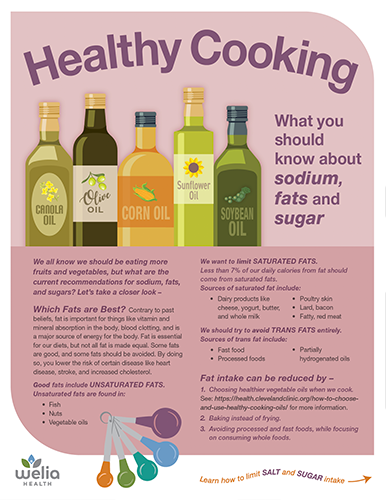
What you should know about sodium, fats and sugar

We all know we should be eating more fruits and vegetables, but what are the current recommendations for sodium, fats, and sugars? Let’s take a closer look –

Which fats are best?

Contrary to past beliefs, fat is important for things like vitamin and mineral absorption in the body, blood clotting, and is a major source of energy for the body. Fat is essential for our diets, but not all fat is made equal. Some fats are good, and some fats should be avoided. By doing so, you lower the risk of certain diseases like heart disease, stroke, and increased cholesterol.

Good fats include UNSATURATED FATS

Unsaturated fats are found in:

  • Fish
  • Nuts
  • Vegetable oils

We want to limit SATURATED FATS

Less than 7% of our daily calories from fat should come from saturated fats.

Sources of saturated fat include:

  • Dairy products like cheese, yogurt, butter, and whole milk
  • Poultry skin
  • Lard, bacon
  • Fatty, red meat
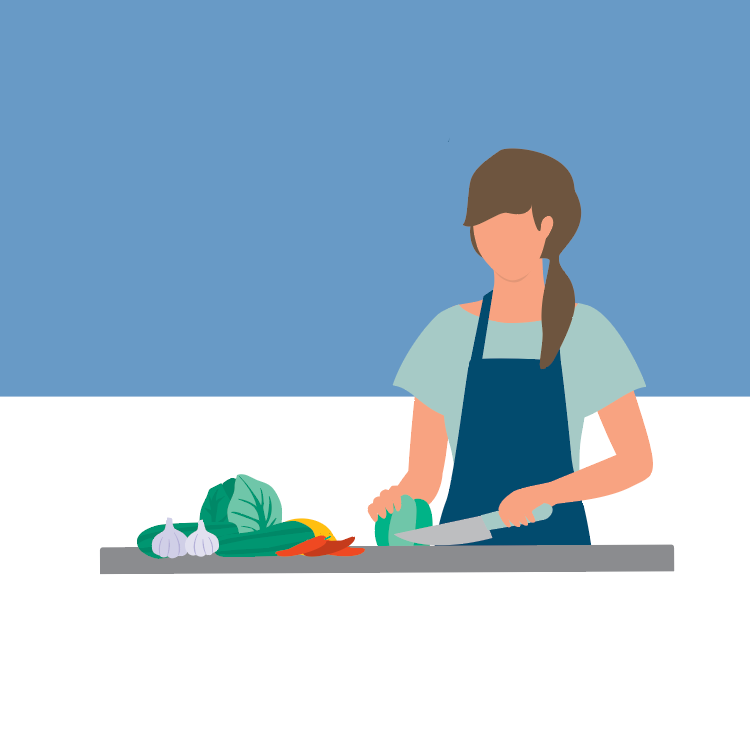
Illustration of a person chopping vegetables

We should try to avoid TRANS FATS entirely

Sources of trans fat include:

  • Fast food
  • Processed foods
  • Partially hydrogenated oils

Fat intake can be reduced by:

  1. Choosing healthier vegetable oils when we cook. See How to Choose and Use Healthy Cooking Oils from the Cleveland Clinic for more information.
  2. Baking instead of frying.
  3. Avoiding processed and fast foods, while focusing on consuming whole foods.

Learn how to limit salt and sugar intake

Limit sugar intake

Sugar seems to be to in everything we eat today and can even be hidden in the ingredients using alternative names. According to the American Heart Association, Americans are consuming two to three times more sugar than recommended in the 2020-2025 Dietary Guidelines. Excess sugar intake is associated with an increased risk of diabetes, obesity, and hypertriglyceridemia or a high level of a certain type of fat (triglycerides) in the blood.

The guidelines recommend that women consume no more than 100 calories (six teaspoons or 25 grams) of added sugar a day. For men, it’s no more than 150 calories (nine teaspoons or 36 grams). Use the following list to help identify added sugars in your food and drink.

Alternative names for added sugars:

Measuring spoons
  • Anhydrous dextrose
  • Brown sugar
  • Confectioner’s powdered sugar
  • Corn syrup
  • Corn syrup solids
  • Dextrose
  • Fructose
  • High-fructose corn syrup
  • Honey
  • Invert sugar
  • Lactose
  • Malt syrup
  • Maltose
  • Maple syrup
  • Molasses
  • Nectars (peach nectar, pear nectar)
  • Pancake syrup
  • Raw sugar
  • Sucrose
  • White granulated sugar

You can reduce your consumption by:

  1. Reading food labels and consuming food and drinks with limited to no added sugar. Make sure to check the ingredients list for hidden sugars.
  2. Eating fresh fruits and raw vegetables as snacks instead of sugary snacks
  3. Drinking water instead of soda

Limit salt intake

Many people are often unaware of how much salt (sodium) they are consuming. Sodium is essential in our diet, but we want to avoid added sodium. You should aim to stay under 5g of sodium (equivalent to 5 teaspoons) per day. According to the World Health Organization (WHO), many people consume an average of 9-12g per day. Processed foods are often to blame for excessive salt intake.

You can reduce your consumption by:

  1. Adding flavor with antioxidant-rich herbs and spices such as oregano, cinnamon, mint, thyme, and black pepper instead of salt.
  2. Limiting the consumption of salty snacks.
  3. Checking food labels and choosing products with lower sodium content.
  4. Consuming fresh fruits and vegetables to increase potassium, which can mitigate the negative effects of elevated sodium consumption on blood pressure.

Did you know…

The Dietary Guidelines for America also recommends that children under the age of 2 years not consume foods containing any added salt or sugar.

To learn more about nutritional needs and considerations for yourself and your family, schedule an appointment with one of Welia Health’s Registered Dietitians. Call 320.679.1313 or schedule online through MyChart. Please note that a referral from your provider is required.

Get cooking!

3 important things to remember:

  1. Not all fats are bad for us – know the difference
  2. Read food labels to manage salt and sugar intake
  3. Registered Dietitians at Welia Health can help

Pine City Farmer’s Market

We asked our Welia Health staff to tell us their favorite outdoor things to do in the summer. Below you’ll find some of our recommendations for family-friendly events and places to explore. Pick what looks interesting to you, then get outside and have some fun!

Kanabec County area

Illustration woman walking her dog
  • Mora Area Farmers Market
    8am – 1pm Saturdays | May – October
    Mora United Methodist Parking Lot
  • Music in the Park Summer Concerts
    6:30 – 8pm | Thursdays beginning in June
    ci.mora.mn.us
  • Mora Summer Rec
    Sponsored by MAYRA (Mora Area Youth Recreation Association)
    mayrasports.com

Pine County area

  • Pine City Farmer’s Market
    11am – 1pm | Fridays and Saturdays from June 9 – August 25
    Come see us June 9, June 23, July 7, July 21, August 11 and August 25 for health info, fun activities and ideas!
    facebook.com/PineCityFarmersMarket/
Illustration of a man riding his bike

MORE things to do in Pine County and beyond

  • Sweet Summer Sounds
    6:30 – 8pm in June, July and August (see Facebook for schedule)
    Hinckley Westside Park
    tinyurl.com/msfkbje3
  • National Night Out
    August 1 for all areas

Share your ideas with us!

Know of more fun things to do outside?
Send an email to info@WeliaHealth.org, and we’ll update our listing all summer long!

Don’t forget to hydrate!

While you’re out and about this summer, don’t forget to hydrate!

How much water do we need?

Illustration of a water bottle

The National Academies of Science, Engineering and Medicine recommends that an adequate daily fluid intake is about 15.5 cups (125 oz) for men and about 11.5 cups (91 oz) for women.

However, not all of our daily fluids need to be met with water alone. Water, other beverages, and the water in the foods we eat can help us meet the daily fluid recommendation.

Fluid needs can be higher for those people that are highly active, live in a warm and/or dry climate, are ill with fever, infection, vomiting and/or diarrhea, or are overweight or obese.

How much is enough?

Use the urine test to determine if you are getting enough fluids. If your urine is clear or pale yellow, you likely are getting enough fluids. If your urine is a bright or dark yellow or has a strong odor, you likely need additional fluids.

Why do we need water?

Water is essential for your body to function. Here are just some of the reasons adequate hydration is so important for your body:

  • Carries nutrients and oxygen to our cells
  • Gets rid of waste through perspiration, urination and bowel movements
  • Flushes bacteria from our bladder
  • Aids in digestion and prevents constipation
  • Regulates body temperature
  • Helps to maintain healthy blood pressure
  • Protects body organs and tissues
  • Moistens mucus membranes in our eyes, nose and mouth
  • Lubricates and cushions our joints

Get out there!

3 important things to remember:

  1. Our communities have much to offer for outdoor fun
  2. Check back often for more ideas all summer long
  3. Don’t forget to bring water and stay hydrated

Pine City Farmer’s Market

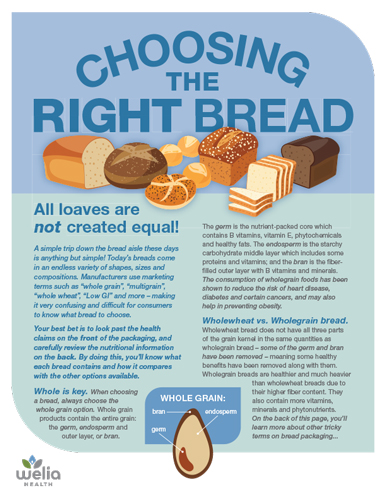
All loaves are not created equal!

A simple trip down the bread aisle these days is anything but simple! Today’s breads come in an endless variety of shapes, sizes and compositions. Manufacturers use marketing terms such as “whole grain”, “multigrain”, “whole wheat”, “Low GI” and more – making it very confusing and difficult for consumers to know what bread to choose.

Your best bet is to look past the health claims on the front of the packaging, and carefully review the nutritional information on the back. By doing this, you’ll know what each bread contains and how it compares with the other options available.

Whole is key

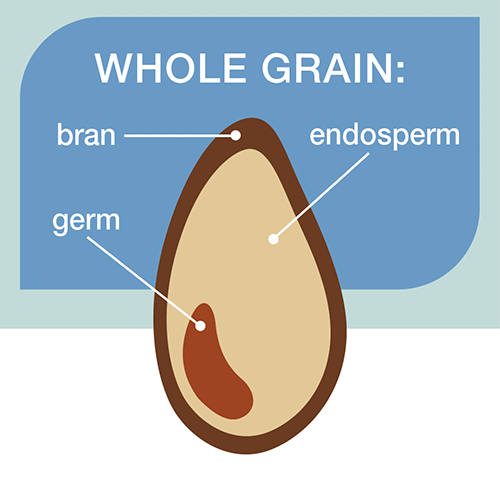
Illustration of the anatomy of a whole grain. The bran, endosprerm, and germ.

When choosing a bread, always choose the whole grain option. Whole grain products contain the entire grain: the germ, endosperm and outer layer, or bran.

The germ is the nutrient-packed core which contains B vitamins, vitamin E, phytochemicals and healthy fats. The endosperm is the starchy carbohydrate middle layer which includes some proteins and vitamins; and the bran is the fiber-filled outer layer with B vitamins and minerals.

The consumption of wholegrain foods has been shown to reduce the risk of heart disease, diabetes and certain cancers, and may also help in preventing obesity.

Wholewheat vs. Wholegrain bread

Wholewheat bread does not have all three parts of the grain kernel in the same quantities as wholegrain bread – some of the germ and bran have been removed – meaning some healthy benefits have been removed along with them. Wholegrain breads are healthier and much heavier than wholewheat breads due to their higher fiber content. They also contain more vitamins, minerals and phytonutrients. On the back of this page, you’ll learn more about other tricky terms on bread packaging…

What do all these “healthy” terms mean?

Unfortunately, we can’t rely on the marketing language used on the packaging when choosing our bread. Many of these terms are just ways to create the impression that the bread is healthy. Here are some examples:

  • Multigrain: This type of bread contains more than one grain (for example – wheat, rice, corn, etc.) but may not contain the whole grain or even much fiber at all.
  • Enriched: These are usually white or wheat breads that have vitamins and minerals added after the refining process; again, these breads may or may not be whole grain.
  • Stone ground: This term only refers to the type of grinding the grain undergoes. It is not an indicator of whole grain.

What else does the nutrition label reveal?

  • The order matters. By law, food manufacturers are required to list ingredients in descending order based on their weight. That means the first ingredient listed is the most abundant. Look for bread with one of the following listed as its number one ingredient: wholegrain wheat flour, wholegrain corn, whole rye, whole oats, wheat germ, barley, buckwheat, millet, spelt, quinoa or bulgar wheat.
  • Fiber is important. The recommended fiber content is six grams of fiber or more per 100g of bread. The is the fiber that comes from the outer bran layer which is left intact in whole grains. Adequate fiber intake is essential to good gut health. Chronic diseases such as inflammation, obesity, type 2 diabetes, cardiovascular disease and even some mental diseases have been linked to poor gut health. You should aim for 25-35 grams of fiber per day, and half of your daily fiber intake should come from a variety of whole grains.
  • Don’t forget serving size. Slices of bread vary greatly in size and weight. Be sure to look at the nutrition label to learn how many carbohydrates
  • and calories are in each slice of bread. Look for thinly-sliced breads to assist portion control, or opt for open-faced you with sandwiches using one slice of bread rather than two.

Five delicious ways to enjoy your wholegrain bread

Fruit and nut combos!

Try wholegrain bread toasted with peanut butter and banana slices; almond butter and apple slices; or soy butter and pear slices.

Tomato & cheese, please!

Melt your favorite cheese on a piece of wholegrain bread and top with a fresh tomato slice.

Tasty toast!

Spread light tuna salad on toasted wholegrain bread and top with shredded carrot. Or try topping your toast with canned salmon, arugula and green pepper.

Healthier French toast!

Using wholegrain bread for your French toast makes it delicious and nutritious. Make extra slices to freeze and enjoy for a fast breakfast on a busy morning.

Sandwich surprises!

Treat yourself and your family to some unexpected sandwich combos:

  • hummus, shredded carrots and baby sprouts
  • refried beans, lettuce and tomato
  • tzatziki and cucumber
  • egg salad, dill and red onion

Bread-ready!

3 important things to remember:

  1. Whole grain is always the healthiest option
  2. Rely on the nutrition label for the best information
  3. Don’t be fooled by “healthy” marketing terms

Pine City Farmer’s Market

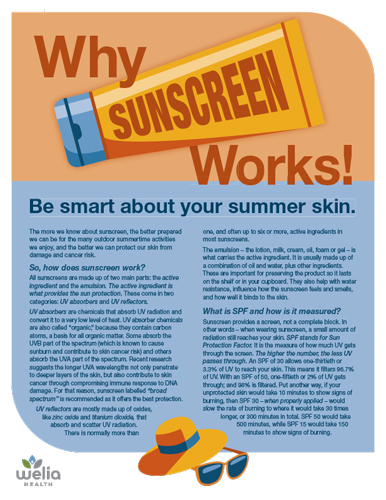
Be smart about your summer skin

The more we know about sunscreen, the better prepared we can be for the many outdoor summertime activities we enjoy, and the better we can protect our skin from damage and cancer risk.

So, how does sunscreen work?

All sunscreens are made up of two main parts: the active ingredient and the emulsion. The active ingredient is what provides sun protection. These come in two categories: UV absorbers and UV reflectors.

UV absorbers are chemicals that absorb UV radiation and convert it to a very low level of heat. UV absorber chemicals are also called “organic,” because they contain carbon atoms, a basis for all organic matter. Some absorb the UVB part of the spectrum (which is known to cause sunburn and contribute to skin cancer risk) and others absorb the UVA part of the spectrum. Recent research suggests the longer UVA wavelengths not only penetrate to deeper layers of the skin, but also contribute to skin cancer through compromising immune response to DNA damage. For that reason, sunscreen labeled “broad spectrum” is recommended as it offers the best protection.

UV reflectors are mostly made up of oxides, like zinc oxide and titanium dioxide, that absorb and scatter UV radiation. There is normally more than one, and often up to six or more, active ingredients in most sunscreens. The emulsion – the lotion, milk, cream, oil, foam or gel – is what carries the active ingredient. It is usually made up of a combination of oil and water, plus other ingredients. These are important for preserving the product so it lasts on the shelf or in your cupboard. They also help with water resistance, influence how the sunscreen feels and smells, and how well it binds to the skin.

What is SPF and how is it measured?

Sunscreen provides a screen, not a complete block. In other words – when wearing sunscreen, a small amount of radiation still reaches your skin. SPF stands for Sun Protection Factor. It is the measure of how much UV gets through the screen. The higher the number, the less UV passes through. An SPF of 30 allows one-thirtieth or 3.3% of UV to reach your skin. This means it filters 96.7% of UV. With an SPF of 50, one-fiftieth or 2% of UV gets through; and 98% is filtered. Put another way, if your unprotected skin would take 10 minutes to show signs of burning, then SPF 30 – when properly applied – would slow the rate of burning to where it would take 30 times longer, or 300 minutes in total. SPF 50 would take 500 minutes, while SPF 15 would take 150 minutes to show signs of burning.

A true-or-false quiz to help you enjoy the summer sun safely!

1.If you have skin that doesn’t burn, you don’t need sunscreen.
2.Spray sunscreens are not as effective as lotions.
3.Sunscreen should be applied immediately upon arrival at the beach.
4.It’s smart to have sunscreen in the car at all times for on-the-go use.
5.If you have skin that doesn’t burn, you don’t need sunscreen.
6.If it’s cloudy, you don’t need as much sunscreen.
7.Even lips need sunscreen.
8.Most people don’t apply an adequate amount of sunscreen.
9.You need a special sunscreen for your face.
10.Sunscreens don’t expire.

See answers at the bottom of this post.

Five reasons to wear sunscreen every day

Reduce the risk of sunburn

Your skin can burn from spending time outside with no sunscreen, and
this burning can lead to discomfort and damage to your skin.

Prevent signs of aging

Repeated sun exposure with little to no protection can cause damage to your elastin, collagen and skin cells. Over time, this can lead to wrinkles, fine lines, discoloration, and a leathery appearance to the skin.

Reduce the risk of skin cancer

Using sunscreen daily is one of the best ways to prevent skin cancer. Statistics show that by age 70, one in five Americans will develop skin cancer. You can lower your risk by using a sunscreen of SPF 30 (or higher) multiple times a day.

Prevent skin discoloration

Applying sunscreen throughout your day can help prevent “sun spots” from appearing on your skin.

Reduce inflammation

Exposure to UV rays can cause painful redness and inflammation. If you have sensitive skin, look for a sunscreen with gentle ingredients; and avoid spray-on sunscreen which can contain harsh ingredients like alcohol.

Be sun-smart!

3 important things to remember:

  1. Use a broad spectrum sunscreen; 30 SPF or higher.
  2. Apply sunscreen generously – slather it on!
  3. Reapply every 2 hours, or after swimming or sweating.

Quiz answers

1 = False. While it’s true that people with lighter skin may be more at risk for UV damage, everyone can get skin cancer. Always wear sunscreen no matter what.

2 = True. Spray might be convenient but it’s difficult to know if you’ve used enough and covered all areas of your body. The American Association of Dermatology recommends lotion or cream sunscreens.

3 = False. It takes 30 minutes for the ingredients in your sunscreen to activate and begin fully protecting your skin. That means it’s best to apply sunscreen 30 minutes before sun exposure.

4 = False. The FDA recommends keeping sunscreen products out of direct sun and away from excessive heat. Storing sunscreen in a hot car breaks down the ingredients and reduces its effectiveness.

5 = True. Although a base tan may offer some protection, it’s very minimal –
similar to wearing an SPF of just 3 or 4. A far better safeguard against burns is applying an SPF 30 or higher.

6 = False. Even on cloudy days, up to 80% of the UV rays will still get through to your skin, meaning you can still get burned.

7 = True. ALL uncovered skin should be protected with sunscreen, including nose, ears, neck, hands, feet, hairline/part, and lips.

8 = True. A thin coat of sunscreen is not enough to do the job. Most people don’t even apply half of what is needed to get the protection level the sunscreen formula provides. For your body, you should rub on as much sunscreen as would fill a shot glass (or one ounce), and for your face you should use at least a nickel-sized dollop.

9 = False. It’s ok to use a face sunscreen if other formulas feel too heavy. However, one product is really all you need. Whether you use one product all over, or one for body and another for face, the key is to make sure you use ENOUGH.

10 = False. Sunscreens have expiration dates for good reason. Chemical formulas change and break down over time, making them less effective. Store your sunscreen in a cool, dry space and remember to check the expiration date to ensure your sunscreen is protecting you properly.

Scroll to Top