
Welia Health Connections
welia health logo
320.679.1212

Pine City Farmer’s Market

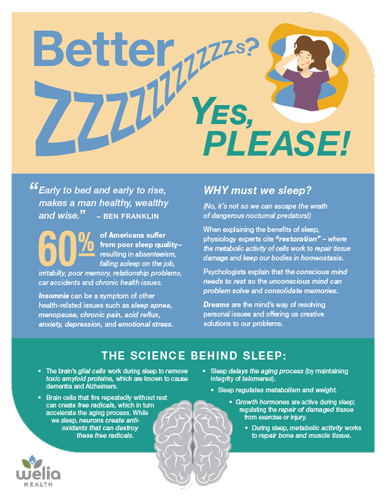
10 tips for good sleep management

“Early to bed and early to rise, makes a man healthy, wealthy and wise.”

— Ben Franklin

60% of Americans suffer from poor sleep quality – resulting in absenteeism, falling asleep on the job, irritability, poor memory, relationship problems, car accidents and chronic health issues.

Insomnia can be a symptom of other health-related issues such as sleep apnea, menopause, chronic pain, acid reflux, anxiety, depression, and emotional stress.

Why must we sleep?

(No, it’s not so we can escape the wrath of dangerous nocturnal predators!)

When explaining the benefits of sleep, physiology experts cite “restoration” – where the metabolic activity of cells work to repair tissue damage and keep our bodies in homeostasis.

Psychologists explain that the conscious mind needs to rest so the unconscious mind can problem-solve and consolidate memories.

Dreams are the mind’s way of resolving personal issues and offering us creative solutions to our problems.

The science behind sleep

  • The brain’s glial cells work during sleep to remove toxic amyloid proteins, which are known to cause dementia and Alzheimers.
  • Brain cells that fire repeatedly without rest can create free radicals, which in turn accelerate the aging process. While we sleep, neurons create anti-oxidants that can destroy these free radicals.
  • Sleep delays the aging process (by maintaining integrity of telomeres).
  • Sleep regulates metabolism and weight.
  • Growth hormones are active during sleep; regulating the repair of damaged tissue from exercise or injury.
  • During sleep, metabolic activity works to repair bone and muscle tissue.

Beware of sleep robbers!

Be aware that these culprits can rob you of your much-needed sleep. Try to make appropriate adjustments when possible:

  • Caffeine
  • Heavy Foods
  • Cell Phone / Technology Use Medications
  • Room Temperature (too warm)
  • Sleep Partner Snoring
  • Pets in the Bed
  • Clutter
  • Afternoon Naps (can be both good and bad)
  • Shift Work
  • Jet Lag
  • Lack of Exercise
  • Sleep Apnea
  • Frequent Urination
  • Chronic Pain
  • Depression /Anxiety
  • Stress

10 tips for good sleep management

Keep regular sleep cycle

Maintain a routine every night (within 15 minutes).

Institute a digital curfew

Turn off all digital devices one hour before bed.

Create your ideal sleep environment

  • Ambiance – light/darkness
  • Room temperature – avoid a warm (or uncomfortably warm) sleep space.
  • Pets: healthy boundaries –keep pets out of bedroom.
  • Tech-free bedroom – (No screens or gadgets!)
  • Sleep comfort – don’t forget the quality of your bedding! (High thread count sheets, comfortable pillows, good mattress pad etc.)
  • Quiet bedroom – noise reduction; use white noise if needed to drown out distracting sounds.
  • Sleep partner – if snoring and/or restlessness interrupt sleep you might consider sleeping in separate beds.
  • Food and snacks – consider a “no food in bedroom” policy.
  • Other distractions – be aware of sleep distractions leading up to bedtime and during sleeping hours. Be creative to find changes in routine or environment to improve your sleep quality.

Add exercise to your daily routine

Decrease your caffeine intake

Learn to meditate

Throw out your TV

Consider moving TV out of bedroom.

Avoid alcohol and nicotine

Clear your late night mind

Make a to-do list before bed. Keep it handy near your bed to add to it if things come to mind during the night.

Remove non-sleep activities from your bedroom

(Office supplies and duties, TV, food, etc.) Your bed is for sleep (and sex)!

Sleep well!

3 important things to remember:

  1. Sleep is essential to good health
  2. Reduce those sleep robbers
  3. Create your ideal sleep environment

Pine City Farmer’s Market

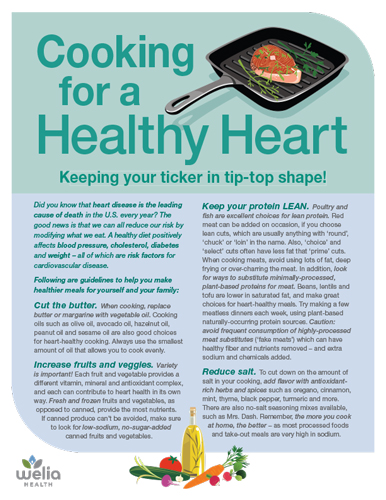
Keeping your ticker in tip-top shape!

Did you know that heart disease is the leading cause of death in the U.S. every year? The good news is that we can all reduce our risk by modifying what we eat. A healthy diet positively affects blood pressure, cholesterol, diabetes, and weight – all of which are risk factors for cardiovascular disease. Following are guidelines to help you make healthier meals for yourself and your family.

Cut the butter

When cooking, replace butter or margarine with vegetable oil.

Cooking oils such as olive oil, avocado oil, hazelnut oil, peanut oil and sesame oil are also good choices for heart-healthy cooking. Always use the smallest amount of oil that allows you to cook evenly.

Increase fruits and veggies

Variety is important.

Each fruit and vegetable provides a different vitamin, mineral and antioxidant complex, and each can contribute to heart health in its own way.

Fresh and frozen fruits and vegetables, as opposed to canned, provide the most nutrients. If canned produce can’t be avoided, make sure to look for low-sodium, no-sugar-added canned fruits and vegetables.

Keep your protein lean

Poultry and fish are excellent choices for lean protein.

Red meat can be added on occasion if you choose lean cuts, which are usually anything with ‘round,’ ‘chuck’ or ‘loin’ in the name. Also, ‘choice’ and ‘select’ cuts often have less fat than ‘prime’ cuts. When cooking meats, avoid using lots of fat, deep frying, or over-charring the meat.

In addition, look for ways to substitute minimally-processed, plant-based proteins for meat. Beans, lentils and tofu are lower in saturated fat and are great choices for heart-healthy meals. Try making a few meatless dinners each week, using plant-based naturally-occurring protein sources.

Caution: avoid frequent consumption of highly-processed meat substitutes (‘fake meats’) which can have healthy fiber and nutrients removed, and extra sodium and chemicals added.

Reduce salt

To cut down on the amount of salt in your cooking, add flavor with antioxidant-rich herbs and spices such as oregano, cinnamon, mint, thyme, black pepper, turmeric and more. There are also no-salt seasoning mixes available, such as Mrs. Dash. Remember, the more you cook at home, the better – as most processed foods and take-out meals are very high in sodium.

Make food substitutions for heart-healthy cooking

Instead of:Try this:
All-purpose flourUse half all-purpose flour and half 100% whole wheat flour.
BaconTurkey bacon – but make sure it is not higher in fat or sodium than the bacon you are replacing.
Canned fruitsFresh or frozen fruits – if you must buy canned, canned in water is best; canned in its own juice is okay.
Dairy products (full fat)Low-fat, reduced-fat, fat-free or light dairy products. NOTE: Look at the ingredient listing carefully, especially with yogurt. Fruit-flavored yogurts often add extra sugar, syrup or artificial sweeteners which can drastically reduce the health benefits of the product.
Deep fryingBaking, boiling, broiling, microwaving, roasting, steaming
DessertsFresh fruit with no added sugar
MayonnaisePlain, unsweetened nonfat yogurt
Red meatPoultry, fish, tofu, beans, peas, lentils
Refined grains100% whole grains – whole barley, brown rice, buckwheat, whole corn, oats, whole rye, whole wheat, wild rice
SaltSpices, herbs, salt-free seasonings without potassium chloride
Sour creamPlain, unsweetened nonfat yogurt
SugarReduce the amount of sugar you use – (ex: 1/4 cup instead of 1/2 cup); and add vanilla, nutmeg or cinnamon.
Whole milkUnsweetened low-fat milk, skim milk, soy milk, almond milk, rice milk

Look to the American Heart Association for heart-healthy and delicious recipes. You’ll find more mouth-watering and easy-to-follow recipes at Recipes.Heart.org

Get cooking!

3 important things to remember:

  1. A healthy diet reduces heart disease risk
  2. Incorporate plant-based foods into your diet
  3. Smart substitutions make a difference

Pine City Farmer’s Market

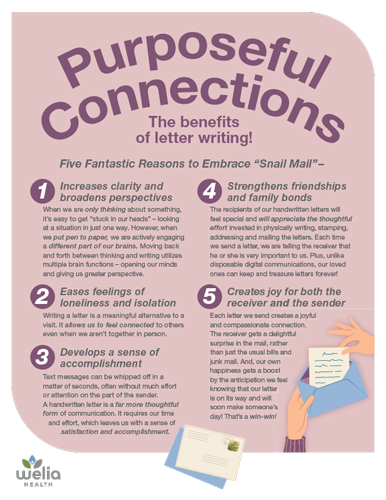
Five fantastic reasons to embrace snail mail

Here are some hints: a sense of success, building human connections, reducing loneliness, and most of all, joyous emotions for the sender and receiver!

Increases clarity and broadens perspectives

When we are only thinking about something, it’s easy to get “stuck in our heads” – looking at a situation in just one way. However, when we put pen to paper, we are actively engaging a different part of our brains. Moving back and forth between thinking and writing utilizes multiple brain functions – opening our minds and giving us greater perspective.

Eases feelings of loneliness and isolation

Writing a letter is a meaningful alternative to a visit. It allows us to feel connected to others even when we aren’t together in person.

Develops a sense of accomplishment

Text messages can be whipped off in a matter of seconds, often without much effort or attention on the part of the sender. A handwritten letter is a far more thoughtful form of communication. It requires our time and effort, which leaves us with a sense of satisfaction and accomplishment.

Strengthens friendships and family bonds

The recipients of our handwritten letters will feel special and will appreciate the thoughtful effort invested in physically writing, stamping, addressing and mailing the letters. Each time we send a letter, we are telling the receiver that he or she is very important to us. Plus, unlike disposable digital communications, our loved ones can keep and treasure letters forever!

Creates joy for both the receiver and the sender

Each letter we send creates a joyful and compassionate connection. The receiver gets a delightful surprise in the mail, rather than just the usual bills and junk mail. And, our own happiness gets a boost by the anticipation we feel knowing that our letter is on its way and will soon make someone’s day! That’s a win-win!

Tips to be better about writing letters

  • Buy some new stationery. Having a supply of cheerful, beautiful note paper will make letter writing fun and inviting.
  • Always have stamps on hand. Our best intentions can easily be derailed if we have run out of stamps or envelopes to mail our letters.
  • Keep address listings up-to-date. Record addresses in one place, in an address book or on your computer. As soon as you learn of an address change, delete the old and replace it with the new one.
  • Stay consistent. As with any habit, it takes repetition. Cultivate a time and space to nourish this very thoughtful, healthy and rewarding practice.
  • Remember – Our letters can be thought of as messages sent into the future – meaningful ways to tell our loved ones how we feel about them. Special letters can be read and reread at milestones such as graduations, marriages and funerals; serving to keep memories alive through multiple generations.

Take the Live Well Letter Writing Challenge!

Choose three people

If three people don’t immediately come to mind, here are some ideas:

  • someone who has experienced a recent loss, or is battling an illness
  • a young person who has moved away from home for the first time (off to college, starting a new job in a different state, etc.)
  • someone from your past who made a difference in your life, or who brings back fond memories

Write the first letters

Send each of your 3 people an initial letter. Tell them they are important to you, and you’d like to keep in touch and offer them encouragement throughout the coming year.

  • Let them know there is no expectation for them to write back, although responses are welcome

Send follow-up letters

Write each of your recipients three (or more) letters throughout the year.

  • Marking the writing dates on your calendar ahead of time can help you to remember – you’ll then write all three letters on those designated dates
  • There’s no reason to stop when the year is over. Keep writing as long as you wish

Happy writing!

3 important things to remember:

  1. Letters create meaningful connections
  2. Keep stamps, paper and envelopes on hand
  3. Letter writing is good for you
Scroll to Top