


 MyChart

We’ve all had one of those days when it all just piles up. A tight deadline, a night of restless sleep, or an unexpected change in plans can leave anyone feeling tense and on edge. You’re feeling stress, and that’s totally normal. Your body actually uses this natural response to sharpen your attention, helping you conquer whatever comes your way.
But when those feelings don’t fade—when even rest doesn’t restore your energy, motivation disappears, and you feel emotionally checked out—it may be something more. That’s when stress can begin to evolve into burnout.
Understanding the difference can help you recognize when it’s time to slow down and take care of yourself before your body and mind suffer the consequences.
What’s the difference?
Stress
Stress is the body’s short-term response to pressure. It may trigger increased heart rate, faster breathing, and sharpened focus. In manageable amounts, stress can enhance performance, strengthen problem-solving, and help us adapt to new challenges.
Burnout
Burnout develops when stress doesn’t let up. It’s the result of ongoing, unrelenting demands with too little recovery. Over time, energy, patience, and a sense of accomplishment begin to fade.
According to the American Psychological Association, burnout is characterized by:
- Physical, emotional, or mental exhaustion
- Decreased motivation and performance
- Negative or cynical attitudes toward oneself or others
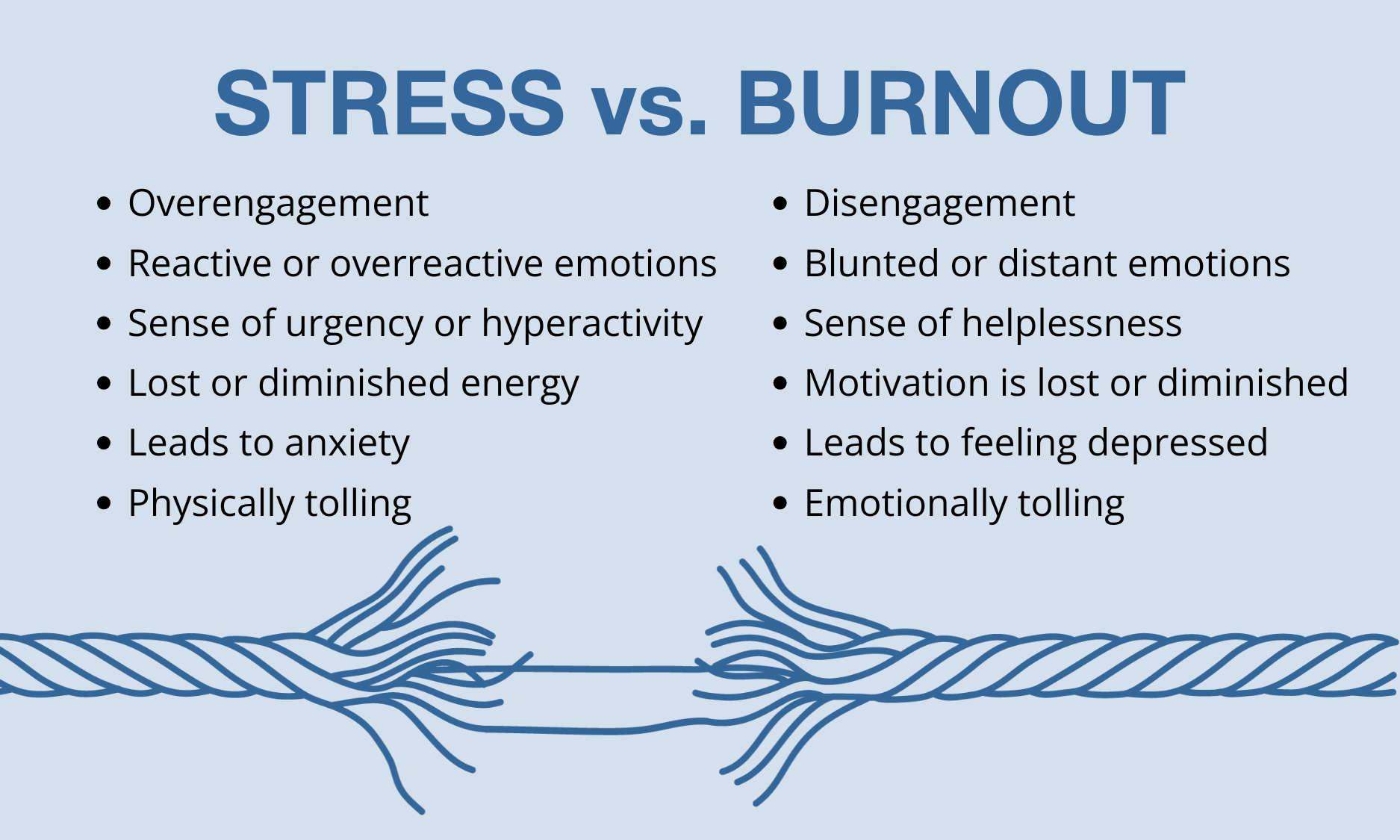
Adapted from: Doctors on Demand
Why the difference matters
Over time, unmanaged burnout can increase the risk of:
- Depression and anxiety
- Sleep problems
- Headaches
- Gastrointestinal issues
- Cardiovascular disease
Research published by the National Institutes of Health shows that chronic stress can lead to long-term changes in brain structure and immune function, potentially contributing to both mental and physical illness.
Recognizing burnout early gives you the chance to take action—and protect your well-being.
Signs you may be burning out
Burnout doesn’t happen overnight. It builds gradually with early signs resembling routine fatigue or irritability. Over time, symptoms may intensify and become harder to ignore.
You may be experiencing burnout if you’re noticing:
- Constant fatigue or exhaustion that doesn’t improve with rest
- Feeling emotionally detached, apathetic, or more cynical than usual
- Difficulty concentrating or feeling easily overwhelmed
- Frequent headaches, stomach issues, or sleep changes
- Increased irritability or decreased job satisfaction
- Reduced sense of accomplishment or effectiveness
- Withdrawing from friends, family, or activities you normally enjoy
” Burnout can make everyday life feel heavier than it should. If you’re noticing you’re more exhausted, less motivated, or just not yourself, that’s your body asking for care. You deserve to pause, recharge, and get support when you need it. “
Megan Krotzer, MD
Welia Health Family Medicine Physician
How to recover—and protect your well-being
The good news: Burnout isn’t permanent. Recovery requires time, compassion, and consistent self-care practices.
1. Take time to rest—really rest
Give yourself permission to pause and step away. Quality sleep, downtime, and brief breaks—such as taking a step outdoors or practicing deep breathing—can help ease stress and reset your nervous system.

2. Reconnect with what matters most
Spend time doing things that give you meaning—such as family dinners, creative hobbies, time outside, or volunteering—all of which can help rebuild emotional resilience.
3. Set healthy boundaries
Limit unnecessary demands and learn to say no. Protecting your time and energy is an act of self-respect—not selfishness.
4. Move your body
Regular physical activity helps reduce stress hormones and improve mood by releasing endorphins. Even 10-15 minutes of movement—such as brisk walking, stretching, yoga, or light strength exercises—can support both mental and physical well-being.
5. Talk to someone
If you’ve been feeling emotionally drained or detached for weeks, don’t go it alone. Speaking with a friend, counselor, or healthcare provider can help you gain clarity and develop tools to help you cope.
When to reach out for help
If stress or burnout is affecting your sleep, mood, or ability to function day-to-day, it’s time to seek support.
Welia Health’s mental health providers can help you identify what’s driving your stress and find healthy, realistic ways to manage it. Take the first step toward feeling like yourself again. Call Welia Health at 320.679.1212 or log in to MyChart to schedule an appointment.