

 MyChart
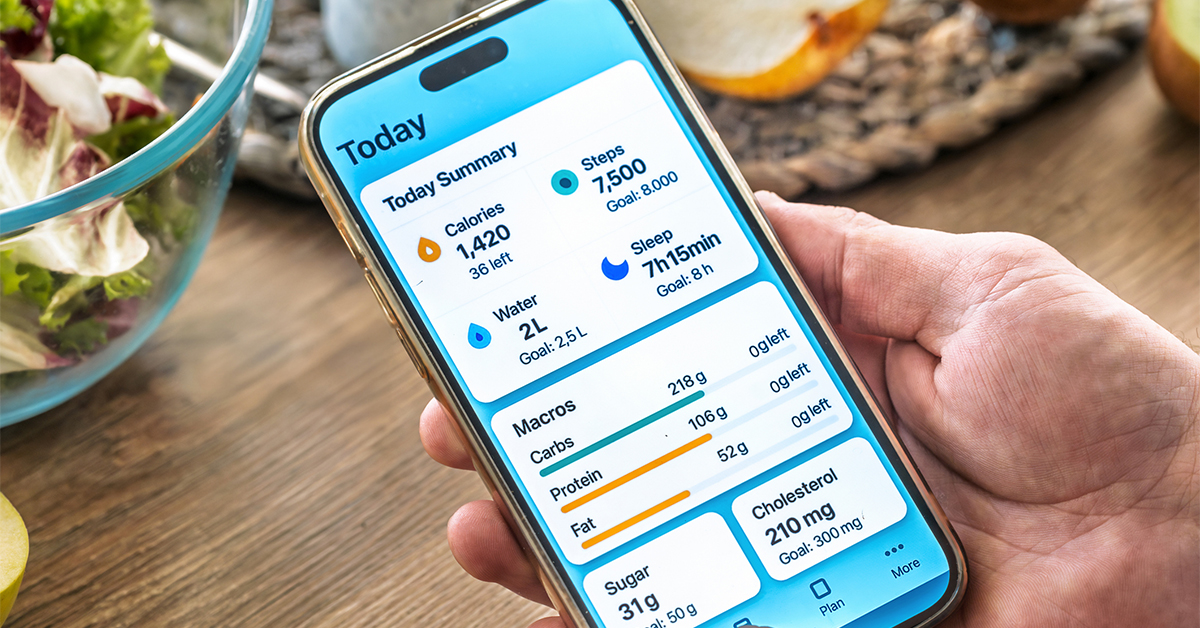
Our phones can track almost everything—steps, sleep, and even every bite we eat. Food-tracking apps promise to help us eat smarter, but do they really make us healthier?
For some people, tracking builds awareness and supports healthy habits. For others, it can create stress or disconnect them from their body’s natural cues. Like most tools, it’s all about how you use it.
When food tracking can be helpful
- Awareness can be eye-opening.
Most of us eat on autopilot—grabbing a snack between errands or skipping meals without realizing it. Even a few days of tracking can show what’s really happening. Maybe breakfast doesn’t happen as often as you thought, or those “occasional” sodas are more regular than you realized. Recognizing patterns isn’t about guilt—it’s about understanding. And understanding is the first step toward making meaningful, lasting change.
“When you track what you eat, you start to notice patterns you might otherwise miss. Seeing things clearly lets you choose better ways to live.”
Danna Woods, RD, LD
Welia Health’s Director of Nutritional Services
- It supports specific goals.
If you’re working toward better blood sugar control, more protein, or improved hydration, tracking can help you stay focused and see progress. Research shows that keeping a food diary, even temporarily, can improve success with healthy weight management.
- It reveals connections.
Food logs can show how what you eat affects how you feel. You might notice certain foods leave you tired or bloated, while balanced meals keep your energy steady. That awareness helps you make smarter, more mindful choices.
- It builds short-term accountability.
Tracking can be especially useful when you’re starting new habits. Logging meals for a few weeks can help you stay consistent until your healthy routines become second nature.
When tracking goes too far
- Losing touch with your body’s cues.
If you find yourself relying more on what the app says than what your body feels, it may be time to pause. Your body—not your phone—should tell you when you’re hungry or full.
- Fueling guilt or perfectionism.
When tracking starts to feel stressful or obsessive, it’s no longer serving you. Food should be a source of nourishment and enjoyment, not anxiety.
- Over-simplifying nutrition.
Calories don’t tell the whole story. True wellness includes the quality of your food, your mood, your social connections, and the joy of sharing meals with others.
- Becoming unsustainable.
If tracking every meal feels like a chore or adds stress to your day, it’s okay to stop. Healthy eating should support your life, not dominate it.
Finding a healthy middle ground
Food tracking doesn’t have to be all-or-nothing. Many people find success using it as a temporary tool—to spot patterns, learn portion sizes, or get back on track after busy weeks.
If you give it a try, remember:
- Treat it as a tool, not a rulebook.
- Focus on progress, not perfection.
- Pay attention to how you feel, not just the numbers.
- Take breaks when it starts to feel like pressure instead of help.
The bottom line
Food trackers can help you learn more about your eating habits and make better choices—but only if they truly support your well-being. If tracking feels stressful or guilt-inducing, step back and trust your body instead.
For personal guidance on what works for you, consider connecting with a Welia Health registered dietitian. Call 320.679.1313 or log onto MyChart to schedule an appointment today.
Additional resources
- Academy of Nutrition and Dietetics — Reliable information on nutrition, meal planning, and finding a registered dietitian.
- National Institutes of Health — Resources on healthy eating, portion control, and weight management strategies.
- The Nutrition Source, Harvard School of Public Health — Science-based guidance about food, nutrition and healthy living