

 MyChart
Simple steps to boost your mobility!
What is mobility?
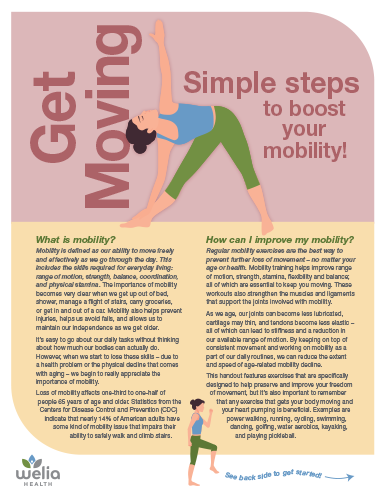
Mobility is defined as our ability to move freely and effectively as we go through the day. This includes the skills required for everyday living: range of motion, strength, balance, coordination, and physical stamina. The importance of mobility becomes very clear when we get up out of bed, shower, manage a flight of stairs, carry groceries, or get in and out of a car. Mobility also helps prevent injuries, helps us avoid falls, and allows us to maintain our independence as we get older.
It’s easy to go about our daily tasks without thinking about how much our bodies can actually do. However, when we start to lose these skills – due to a health problem or the physical decline that comes with aging – we begin to really appreciate the importance of mobility.
Loss of mobility affects one-third to one-half of people 65 years of age and older. Statistics from the Centers for Disease Control and Prevention (CDC) indicate that nearly 14% of American adults have some kind of mobility issue that impairs their ability to safely walk and climb stairs.
How can I improve mobility?
Regular mobility exercises are the best way to prevent further loss of movement – no matter your age or health. Mobility training helps improve range of motion, strength, stamina, flexibility and balance; all of which are essential to keep you moving. These workouts also strengthen the muscles and ligaments that support the joints involved with mobility.
As we age, our joints can become less lubricated, cartilage may thin, and tendons become less elastic – all of which can lead to stiffness and a reduction in our available range of motion. By keeping on top of consistent movement and working on mobility as a part of our daily routines, we can reduce the extent and speed of age-related mobility decline.
This blog features exercises that are specifically designed to help preserve and improve your freedom of movement, but it’s also important to remember that any exercise that gets your body moving and your heart pumping is beneficial. Examples are power walking, running, cycling, swimming, dancing, golfing, water aerobics, kayaking, and playing pickleball.
A simple 4-step starter routine
Luckily, you don’t need to block out hours in your day for this. In fact, just 15 minutes a day can make a significant difference. These 4 mobility exercises will provide you with a great start!
Lunges
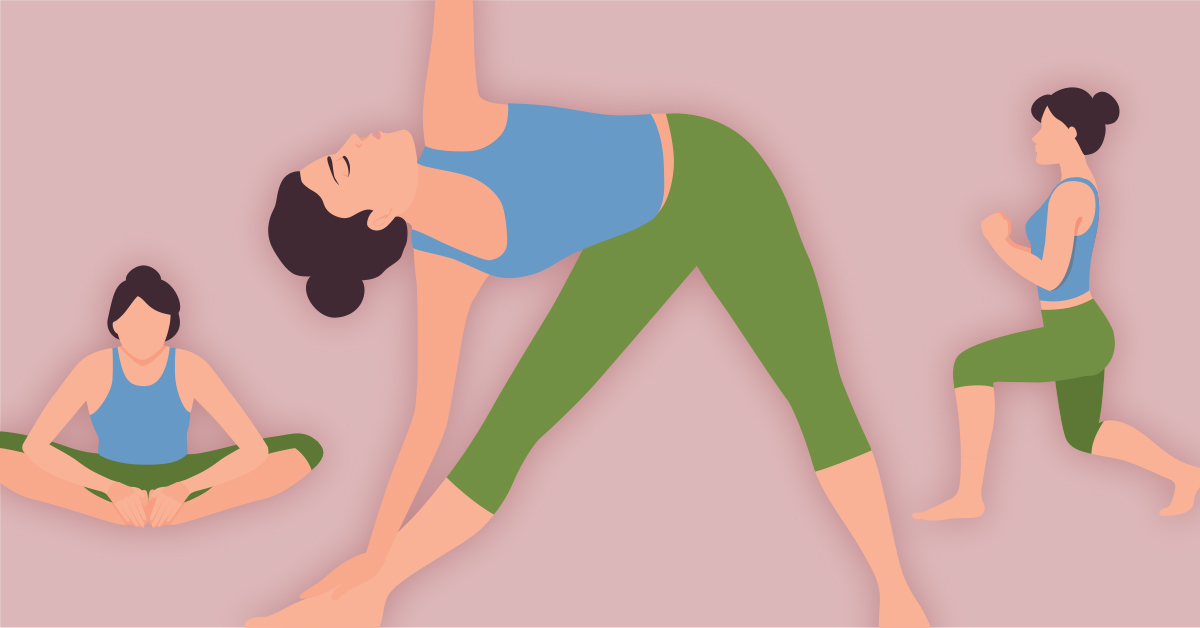
These are excellent for improving your hip mobility and strengthening your lower body. They are a strong foundation for any mobility routine. Stand up straight, step forward with one foot, and bend your knees until they form a 90-degree angle. Push back up and switch to the other leg. No need to rush. Taking slow, deliberate movements is just as valuable. Increase repetitions as you get stronger.
Arm Circles
These help warm up your shoulder joints and improve your range of motion. Stand with arms extended to the sides and make small circles with your arms – gradually increasing the size. Again, slow and steady works best. Circle backward; then change direction and circle forward. Increase reps as you are able.
Hip Extensions
Stand facing a countertop or the back of a sturdy chair and hold on with your hands to steady yourself. Slowly and steadily, move one leg back and away, lifting your straightened leg as high as is comfortable. Hold for a few seconds, and lower back down. Don’t swing the leg; instead, use a smooth, slow lifting motion. Alternate legs and do several repetitions with each leg.
Butterly Stretches
Sit on the floor with the soles of your feet pressed together in front of you. Lean forward towards your feet and use your elbows to gently press your knees towards the floor. You should feel resistance, but not pain. Hold for a few seconds; sit up straight, take a deep breath in, and slowly exhale. Repeat 3-4 times.
Ready for a greater challenge? Add the following 12-step exercise routine.
A 15-minute 12-step routine
WARM-UP
- Arm Circles – (See previous description) for 1 minute
- Torso Twists – Stand with feet shoulder width apart and gently twist your torso from side to side for 1 minute
- Neck Circles – Carefully rotate your neck in a circular motion; both clockwise and counterclockwise; 30 seconds each
UPPER BODY
- Shoulder Rolls – Stand with your arms relaxed at your sides and roll your shoulders forward and backward (1 minute)
- Arm Swings – Extend your arms straight in front of you and swing them forward and backward (1 minute)
- Neck Tilts – Gently tilt your head to the left and right, feeling the stretch to your neck muscles; repeat 5 times
CORE & BACK
- Cat-Cow Stretch – On the floor on your hands and knees, arch your back upward (cat) and then curl it downward (cow); repeat slowly as you breathe deeply
- Plank Twists – Support yourself in a plank position and rotate hips first to one side, then to the other; repeat 5 times
- Child’s Pose – Kneel on the floor with knees wide but big toes touching; sit back on your heels while extending your arms forward for a back and shoulder stretch
LOWER BODY
- Toe Touches – Remain sitting; slowly bend forward and reach for your toes to stretch your hamstrings; repeat 5 times
- Hip Circles – Stand with hands on hips; slowly rotate hips in a circular motion; switch directions (1 minute)
- Ankle Circles – Sit on the floor with legs extended and slowly rotate your ankles in both directions (1 minute)
Let’s Get Moving!
3 important things to remember:
- Pay attention to using proper technique
- Even small steps can make a big difference
- Don’t push too hard; stop if you feel pain