

 MyChart


Pumpkin patches. Fall leaves. Hayrides. The photo opportunities are plentiful at this time of year. This Breast Cancer Awareness Month, however, there is an imaging opportunity to keep top-of-mind that can help save lives: mammograms.
This quick, painless scan is vital to detecting breast cancer, and there are friendly faces at Welia Health ready to make your experience quick and comfortable.
Meet our mammogram techs
As mammogram technologists, our team works to ensure mammogram scans are captured and saved for the radiologist’s review. They also work to communicate when you are due for your next yearly appointment or if a follow-up scan is needed.

If you’ve had a mammogram at Welia Health before, you’ve probably met Karen Pike. She has worked in the imaging field at Welia Health for over three decades as a contracted worker through CMDI.

Another familiar face around Welia Health is Lynn Hanson from CMDI. She has been an imaging tech for 26 years, 16 of them dedicated to mammography. Her goal is to make it a good experience for the patient while obtaining quality images at the same time.

Aidan Johnson has been an imaging tech at Welia Health for four years and has recently cross-trained into mammography. She is passionate about women’s health and the vital role annual screenings play in preventative care.
What is a mammogram?
A mammogram is a scan of the breast tissue to check for any abnormalities due to internal masses or injury. As a tool that can help detect breast cancer, mammograms are vital in catching an early diagnosis. Because of the small amount of compression, mammograms give off some of the lowest levels of radiation compared to other imaging methods.
3D imaging at Welia Health
At Welia Health, the images captured during a mammogram are 3-Dimensional (3D), also known as 3D tomosynthesis. Compared to 2-Dimensional scans, which only provide a few images for review, 3D tomo mammograms take more internal images in the same amount of time.
“With the 3D imaging, it does an image every 1 millimeter in size thickness. So, depending on your overall size and compression, you can have anywhere from 50 to 100 pictures in just one view,” Pike explained.
Having access to multiple images helps increase visibility of any warning signs on a scan and provides radiologists with a more comprehensive look at the tissue.

“We are lucky at Welia to have top of the line equipment to help us obtain the best mammogram possible.”
Lynn Hanson, RT(R)(M)(CT)
Welia Health Mammogram Tech
What to expect for a routine visit
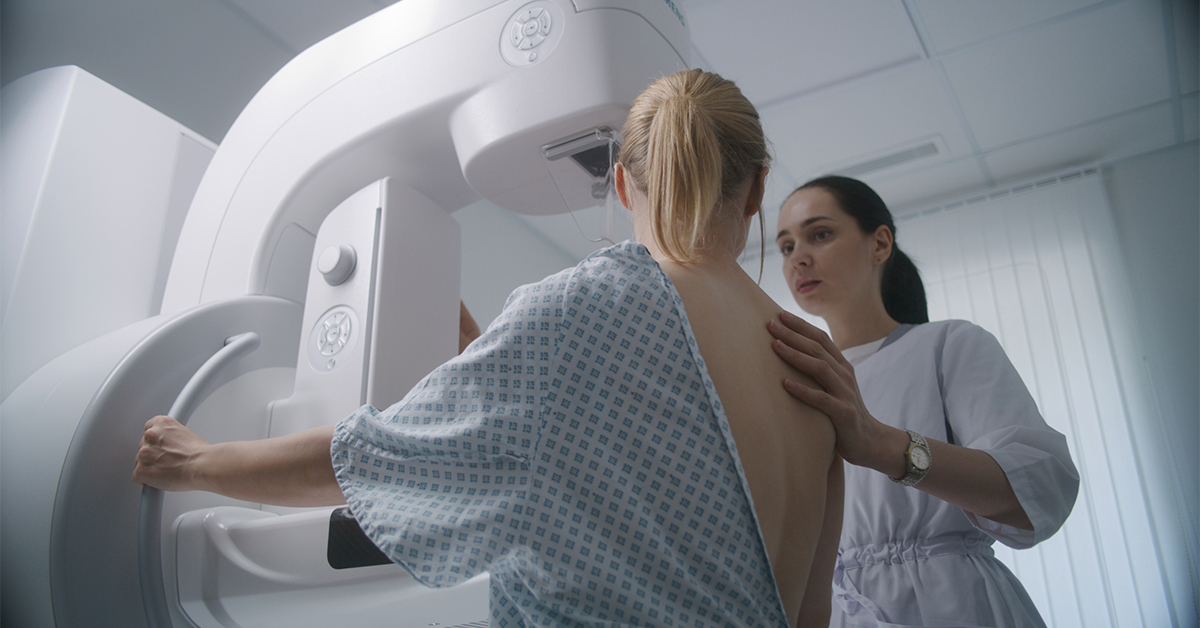
Starting at 40 years old, routine mammograms become an important part of a woman’s annual health checks. These appointments only take about 15 minutes and are as simple as standing and being repositioned for side and front images.
The mammogram machine has a clear imaging plate that can be raised and lowered to capture an image of the breast. To ensure comfort, Welia Health has various shaped compression paddles, including straight and rounded options. Each image takes about 4-5 seconds to capture.
After the scan is complete, pictures are then sent over to a radiologist for review. You will then receive the results via MyChart, typically within a week of the scan. Your healthcare provider will also receive the results, and a letter will be sent to you.
According to Pike, “Once they’re completed by the radiologist, if there’s any additional anything needed, then of course we would reach out and set up all of those follow-up appointments, whatever he recommends from them.”
“Our goal in mammography is to provide exceptional, compassionate care while emphasizing the life-saving importance of early breast cancer detection.”
Aidan Johnson, RT(R)(CT)
Welia Health Mammogram Tech
Family history or visible concerns
Whether a sibling, parent, grandparent or relative has been diagnosed with breast cancer, it is important to discuss this with your healthcare provider. Typically, women with a family history can begin routine screening at 30 years old after consulting with their doctor.
If you encounter any unusual symptoms in the breast before the age of 40 or within a year of your last mammogram, a healthcare provider can also put in a referral for a diagnostic mammogram scan. Some signs to watch out for include:
- Lump in the breast tissue
- Pitting or dimpling in the skin
- Rashes or redness
- Leakage from the nipple
How to schedule a routine mammogram
To ensure your visit is covered by insurance, routine mammograms must be scheduled at least 366 days since your last scan. You may receive a card in the mail as a reminder of when you’re due for an appointment.
There are two simple ways you can schedule your scan for Mora and Pine City locations:
- Call the clinic at 320.679.1313. Our scheduling team can help you set up an appointment over the phone—helping to address any scheduling questions you may have.
- Schedule online via MyChart. With just a few simple steps, you can choose a convenient date, time, and location for your screening mammogram—anytime, from anywhere.
Online self-scheduling is available only for routine screening mammograms and is not available for diagnostic mammograms. If you need a diagnostic mammogram, or if your responses during the scheduling process indicate that additional evaluation may be needed, please contact your healthcare provider to schedule your appointment.